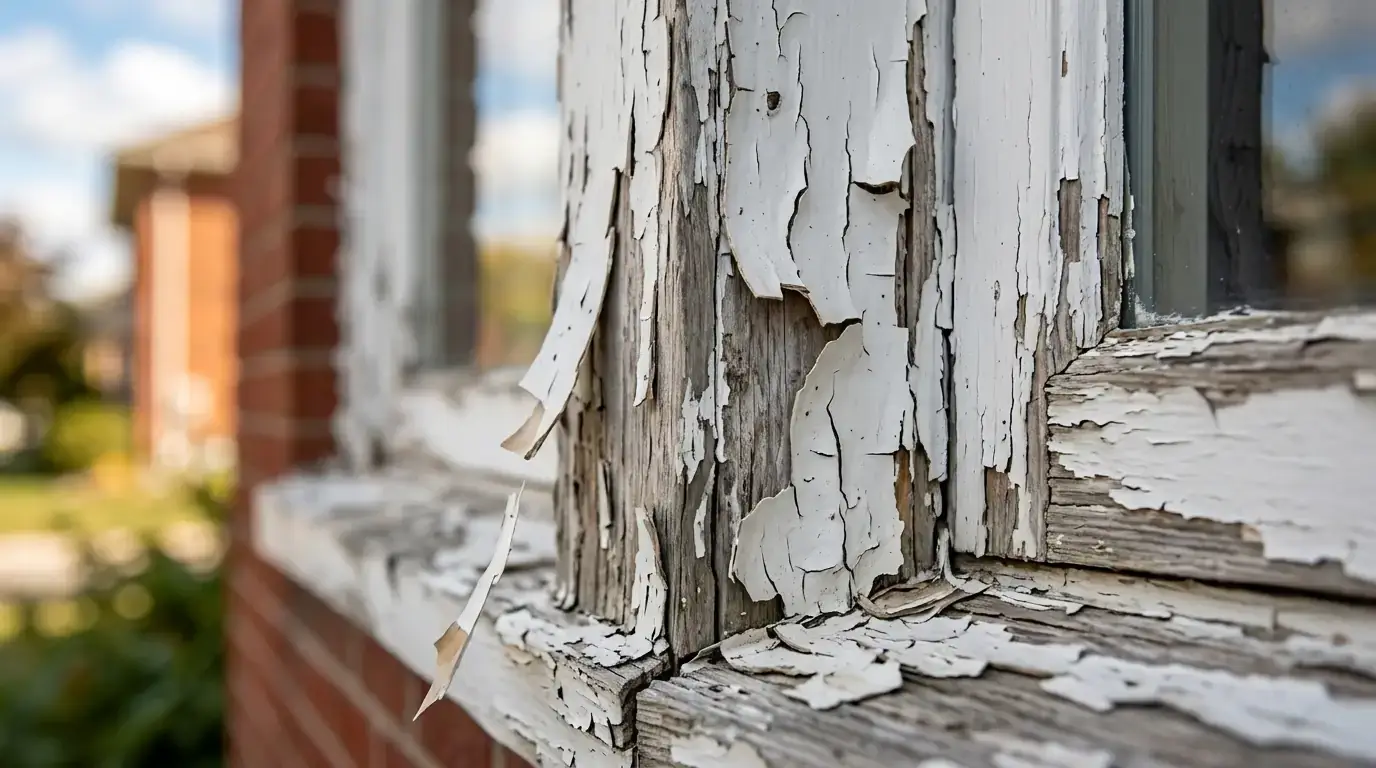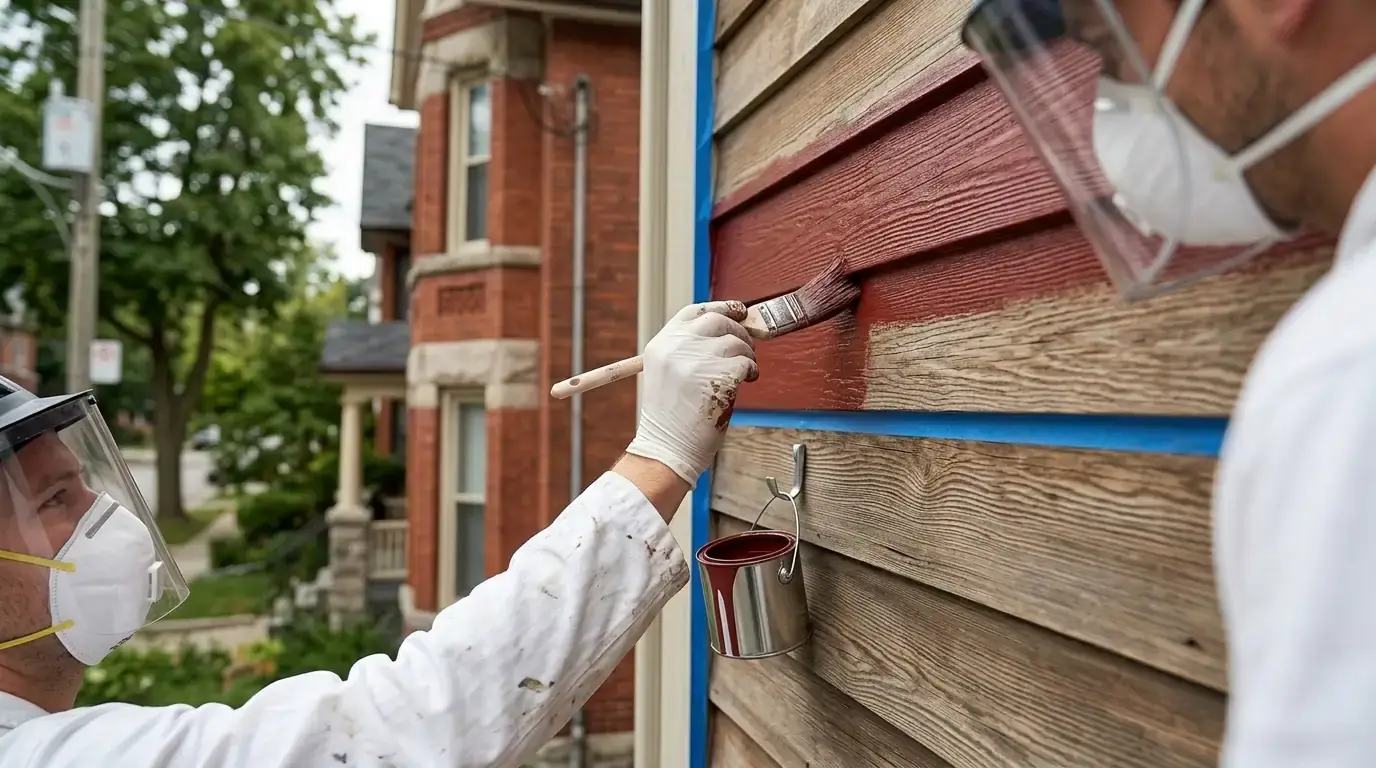
Older wood siding has a long memory. It remembers every wet season, every paint job applied too soon, every caulking that eventually opened up. The most common mistake when painting wood siding on older Toronto homes is not choosing the wrong colour. It is treating weathered clapboards like new lumber. Multiple paint layers, loose edges, exposed end grain, failed caulking, hidden moisture, soft wood, and potentially lead-based paint all need to be understood before a brush comes out.
Health Canada currently says a home built before 1960 probably contains lead-based paint, while homes built between 1960 and 1990 may still contain it on exterior surfaces. That makes lead assessment a real preparation issue for a significant portion of older Toronto homes. Current Benjamin Moore Canada exterior guidance also emphasizes that wood must be clean, fully dry, properly repaired, and primed before exterior finish paint goes on.
The Siding Tells You What Kind of Paint Job It Needs
Don’t judge the siding from the sidewalk. Walk each elevation and inspect up close. Look for:
For a related next step, read Exterior Painting Cost in Toronto, exterior painting cost Toronto.
- peeling or flaking paint
- cracked or alligatoring old coatings
- bare wood
- soft or punky sections
- split clapboards
- open joints
- loose or missing fasteners
- failed caulking around trim and penetrations
- dark staining that may indicate moisture
- paint failure concentrated below windows, eaves, gutters, or roof intersections
- vegetation holding moisture against siding
- areas where water repeatedly splashes from grade
The goal is to separate a coating-maintenance problem from a wood-repair or moisture problem. Paint protects sound wood. It cannot restore rotted boards or stop water entering from a failed gutter, open joint, or roof edge.
Check Lead Risk Before Any Scraping or Sanding
This is the most important safety difference between repainting newer siding and painting old wood siding Ontario homes. Health Canada’s current guidance says homes built before 1960 probably contain lead-based paint; homes built between 1960 and 1990 may still contain it on exterior surfaces. Paint chips can be sent to a laboratory for analysis, or a contractor with suitable X-ray equipment can test painted surfaces directly. Sanders, heat guns, and blowlamps should not be used to remove lead-based paint because they can create toxic dust or fumes.
If the siding age and coating history make lead possible, determine the risk before ordinary sanding, aggressive scraping, or heat removal begins. Lead risk also affects containment and cleanup. Chips and dust should not be allowed to spread across soil, porches, walkways, or areas used by children.
Decide Whether to Repair, Repaint, or Partly Replace
Older siding doesn’t need to be replaced simply because the paint is failing. At the same time, repeated repainting is poor value when the wood itself has deteriorated. Repainting makes sense when the boards are structurally sound, peeling is mainly a coating problem, localized repairs can restore damaged sections, and moisture sources can be corrected. Board replacement becomes more appropriate when wood is soft or deeply rotted, boards are badly split or distorted, fasteners no longer hold, or large sections have lost enough material that filler would only hide the damage.
Find the Cause of Peeling Before Removing the Peeling Paint
Old paint can fail simply because it’s reached the end of its service life. But concentrated peeling usually points to something else, and the siding is often showing you exactly where to investigate. If the same three boards have peeled after multiple repaint cycles, compare them with the surrounding elevation. Are they below a leaking eavestrough? Beside a splash zone? Shaded by dense planting? Trapping water at a horizontal joint? The pattern matters more than the patch size.
Check for overflowing or leaking gutters, failed downspouts, roof or flashing leaks, water trapped at horizontal trim, open caulking around windows and doors, sprinklers wetting the siding, poor drainage near the house, and vegetation reducing airflow. Benjamin Moore Canada’s current exterior guidance specifically says that if existing paint is peeling, the cause should be discovered and corrected before repainting, rather than simply scraped away and repainted over.
Clean the Wood Without Damaging It
Older wood can be softer and more weathered than new siding. Cleaning should remove dirt, mildew, chalk, cobwebs, and surface contamination without cutting grooves into the boards or forcing water behind the siding. Benjamin Moore’s current exterior guide allows power washing as part of the process, but the goal is a clean surface that can then dry fully. On fragile siding, controlled washing or hand cleaning may be safer than aggressive pressure. Protect landscaping, windows, electrical fixtures, and adjacent surfaces, rinse away cleaner residue, and allow enough drying time before testing moisture or applying primer.
The Wood Must Be Fully Dry Before Primer or Paint
Moisture trapped in exterior wood undermines any new coating. Benjamin Moore Canada’s current exterior guidance gives a moisture-content target below 15% before painting, which is a useful checkpoint especially after washing or rain. Don’t assume a sunny afternoon means the clapboards are dry internally. North elevations, shaded sections, joints, end grain, and areas near vegetation can stay damp long after broad sun-facing boards have dried out.
Remove Only What’s Loose, Then Feather the Stable Edges
Where lead has been ruled out or work is proceeding under an appropriate lead-safe plan, loose and failing coating needs to come off before repainting. The objective is a stable transition from remaining paint to exposed wood. Raised edges can telegraph through the new finish and create weak points that fail early. Current Benjamin Moore troubleshooting guidance says cracked or flaking paint should not simply be painted over; loose material should be removed, edges smoothed, bare spots primed, and the surface repainted.
Don’t Prime Rotten Wood and Call It Repaired
Primer is for adhesion, sealing, stain control, and creating a suitable base. It’s not a structural repair. Replace or properly repair deteriorated wood before coating. Pay particular attention to the bottom edges of clapboards, window sills, corner boards, fascia, trim near roofs, boards close to porches and decks, and end grain. These locations take on water earlier than broad vertical faces.
Choose Primer for the Wood and the Problem
There’s no default primer for every old Toronto wood-siding project. The wood species, condition, and failure mode should drive the selection.
For weathered or tannin-rich bare wood, Benjamin Moore Canada currently lists Fresh Start Deck & Siding Primer K094, an exterior alkyd primer designed to penetrate weathered wood, improve adhesion on prepared chalky surfaces, and suppress tannin staining from cedar and redwood. Sherwin-Williams currently lists an Exterior Oil-Based Wood Primer for exterior wood, rough-sawn siding, manufactured siding, hardboard, and trim, with stain-blocking properties for tannin and water stains.
For sound previously painted wood, spot priming exposed or repaired areas may be appropriate rather than priming every square foot. Benjamin Moore’s general exterior guidance specifically calls for spot priming areas that are no longer in sound condition. For cedar, redwood, knots, and old stains where stronger stain control is needed, follow the current primer data for the actual wood and condition rather than defaulting to the same product used on the rest of the house.
Use an Exterior Finish Approved for Wood Siding
Benjamin Moore Canada’s current exterior guide says acrylic and latex exterior paints are compatible with common exterior substrates including wood siding, and highlights products such as Aura Exterior and Regal Select High Build as current options. The important finish properties for older wood siding are compatibility with the primer, adhesion to the prepared substrate, flexibility as the wood expands and contracts, resistance to exterior moisture and UV, and mildew-resistant properties where applicable.
If the house currently has a solid stain rather than a conventional paint film, don’t assume the same preparation and topcoat decision applies. Benjamin Moore Canada currently offers Woodluxe solid deck and siding stain systems for exterior wood. Existing coating type and compatibility should be identified before switching systems.
Caulk Selectively, Not Everywhere
Older wood-sided houses need water management, not indiscriminate sealing. Paintable exterior caulk belongs at joints around windows, doors, penetrations, trim intersections, and other locations intended to be sealed. Siding assemblies also need drainage and drying paths. Don’t fill every overlap, bottom edge, vent opening, or intentional drainage gap because a tube of caulk is nearby. If a joint’s purpose is unclear, confirm the siding detail before sealing it.
Apply Primer and Finish in a Stable Weather Window
Benjamin Moore Canada’s current general exterior guidance says not to paint when the temperature drops below 4.4°C and warns that high humidity slows drying. It also recommends working on the shaded side of the house because direct sun can make paint dry too quickly. These are general guidelines. Always check the current technical data for the specific primer and finish coat being used, because minimum temperature, rain resistance, dry time, and recoat window can all differ.
The Full Prep Sequence for Exterior Wood Siding
- Inspect the boards. Separate coating failure from rot, structural damage, and moisture problems.
- Assess lead risk. Use Health Canada guidance before disturbing older paint.
- Correct water sources. Repair leaks, drainage issues, failed flashing, and other recurring causes of wetting.
- Replace or repair bad wood. Don’t coat over soft, rotten, or badly split boards.
- Clean the siding. Remove contamination without damaging weathered wood.
- Let the wood dry fully. Confirm suitable moisture conditions before coating.
- Prepare failing paint safely. Remove loose coating and feather stable edges using a method appropriate to the lead risk.
- Prime exposed or problem areas. Match the primer to the wood, tannin, weathering, or adhesion need.
- Caulk appropriate joints. Preserve intentional drainage and ventilation paths.
- Apply the compatible finish system. Follow current coverage, weather, dry time, and recoat instructions.
- Inspect before cleanup. Check edges, joints, board bottoms, trim intersections, and repaired areas.
What to Inspect When the Painting Is Finished
Before ladders and protection are removed, check for missed bare wood, thin coverage at board bottoms and edges, visible primer at repairs, open joints that were meant to be sealed, paint bridging across gaps that should stay open, drips beneath clapboard overlaps, and paint on windows, hardware, brick, or roofing. Then note any moisture-prone areas for future inspection. An older wood exterior is a maintenance system, not a one-time cosmetic fix.
Early Problems and What They Usually Point To
Paint peels again in the same location: Recheck moisture and substrate. Recurring failure below a window, gutter, roof edge, or joint points to water, not paint quality.
Brown or yellow staining comes through primer: The wood likely contains tannins, knots, or previous staining that the selected primer didn’t fully suppress. Recheck the primer recommendation for the species and stain source.
Fresh paint blisters in direct sun: Review whether the substrate was dry and whether the coating was applied in excessive heat. Follow the product’s current application guidance before repairing.
Only the bottom edges keep failing: Inspect end grain, water shedding, splashback, and moisture entry. Repeated edge failure usually needs a moisture or carpentry correction before another coat will hold.
Seven Shortcuts That Make Old Siding Fail Again
- Sanding before checking lead risk. Older exterior paint needs a safety assessment first.
- Painting over soft wood. Primer cannot restore rotted siding.
- Pressure washing aggressively. Weathered boards can be damaged or saturated.
- Painting damp siding. Let the wood dry fully before coating.
- Using one primer everywhere by default. Bare cedar, chalky old paint, stains, and sound existing coating can each need different treatment.
- Sealing every overlap with caulk. Siding needs appropriate drainage and drying paths.
- Ignoring the cause of recurring peeling. Correct water problems before recoating.
Questions Homeowners Ask Once the Scraper Comes Out
Can old Toronto wood siding be repainted instead of replaced?
Yes, when the boards remain sound and moisture or coating problems can be corrected. Widespread rot, major splitting, severe movement, or repeated water damage can make partial or full replacement more appropriate.
Should older exterior paint be tested for lead before sanding?
If the home was built before 1960, Health Canada says it probably contains lead-based paint. Homes built between 1960 and 1990 may also contain it on exterior surfaces. Testing or professional assessment should come before ordinary sanding or aggressive removal.
What primer is used on weathered wood siding?
It depends on the wood and the problem. Current examples include penetrating exterior alkyd primers designed for weathered or tannin-rich wood; sound previously painted areas may only need spot priming. Follow the current manufacturer data for the specific situation.
Can you paint directly over peeling wood siding?
No. Loose coating should be removed, the failure cause investigated, exposed wood prepared and primed as required, and any damaged or wet substrate corrected first.
How dry should wood siding be before painting?
Benjamin Moore Canada’s current exterior guidance cites wood moisture content below 15% as a checkpoint. Always follow the specific coating’s current instructions as well.
Should wood siding be painted or stained?
That depends on the existing coating, wood condition, desired appearance, and maintenance plan. Switching systems should be based on compatibility and preparation, not colour preference alone.
Diagnosis Before Decoration
The best plan for painting wood siding on older Toronto homes is to treat the siding as a building material first and a colour surface second. Check lead risk, repair damaged wood, correct moisture, clean and dry the boards, prepare the old coating safely, choose primer for the actual wood and failure mode, then apply a compatible finish in the right weather. The result holds longer than a paint job applied to problems that were painted around.
For broader planning, see exterior painting in Toronto.
Request a Free Quote through PaintersInToronto.ca for an older wood-sided home that needs exterior assessment and painting. PaintersInToronto.ca works exclusively with one licensed and insured independent painting company, and any service agreement is directly with that contractor. Call (647) 532-9046 and Ask for SUNNY, or visit the contact page.