The calendar is a lousy paint inspector. If you are wondering how long does exterior paint last Ontario homes, the most useful answer is a range plus a condition check. Current Sherwin-Williams exterior guidance says exterior paint may last about 7 to 10 years depending on climate, surface material, and paint quality. In practice, exposed wood and trim may need attention sooner, while sound siding or masonry can sometimes stay in good shape longer.
The mistake is treating the age of the paint as the verdict. A seven-year-old coating that is still bonded, dry, and protecting the substrate may be fine. A three-year-old coating that is peeling because water is getting behind it has already lost the argument.
Use the Year Count as a Reminder to Inspect, Not a Deadline to Repaint
A reasonable Ontario planning window for many exterior paint jobs is roughly 5 to 10 years, with current manufacturer guidance commonly centring around 7 to 10 years. That range is not a warranty and does not apply equally to every surface.
- Broad exterior wall systems: often fall somewhere around the 7 to 10 year planning range when the surface and exposure are favourable.
- Painted wood and highly exposed trim: commonly deserve closer inspection earlier, with Toronto contractor guidance often using about 5 to 7 years as a planning range.
- Doors, railings, fascia, sills, and horizontal details: can show wear before the broad wall areas because edges and joints collect more weather and movement.
- Painted masonry or stable siding: may hold up well when moisture is controlled and the original preparation was sound.
The point is not to circle one repaint year on the calendar. It is to know when to start looking more closely.
One House Can Have Four Different Paint Ages at the Same Time
Exterior exposure is uneven. South and west-facing walls can receive stronger sunlight. Shaded areas can stay damp longer. A window sill gets a different weather load from a vertical wall. A fascia board beside a leaking gutter is living a much harder life than sheltered siding under a deep overhang.
Environment and Climate Change Canada’s Toronto climate normals show the wide seasonal swing Ontario coatings need to tolerate, from winter temperatures below freezing to warm summer conditions. Exterior paint also faces rain, snow, humidity, ultraviolet light, and repeated expansion and contraction.
That is why a single “house age” for the coating can be misleading. Inspect by elevation and by material.
Fading and Failure Are Not the Same Thing
A faded wall can still be well bonded. A glossy front door can lose colour before the film actually peels. Those conditions may justify repainting for appearance, but they are different from adhesion failure.
More urgent warning signs include:
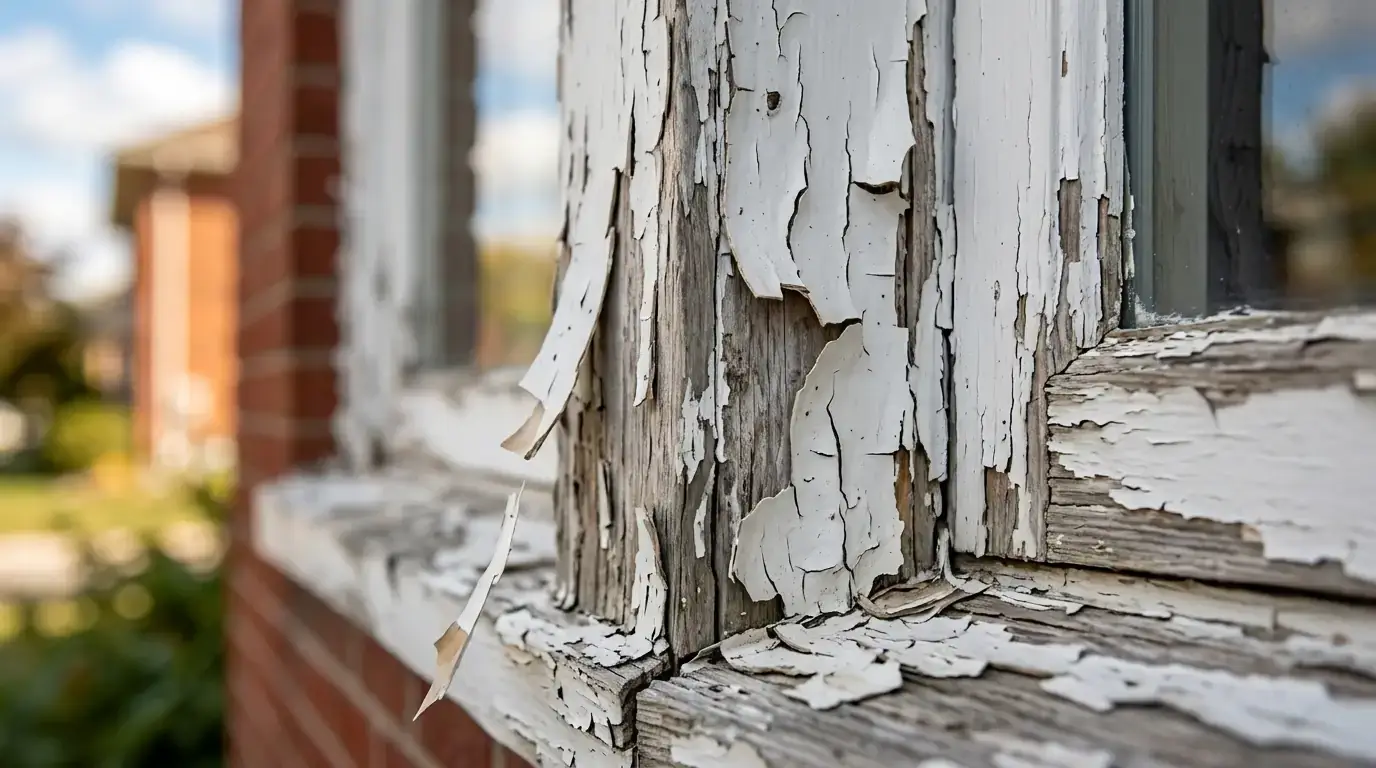
- peeling or flaking
- blistering
- cracking that exposes the substrate
- open caulking joints
- bare wood or metal
- soft or deteriorated wood
- repeated staining or moisture marks
- efflorescence or coating failure on masonry
Colour loss is a maintenance signal. Exposed or failing substrate is a protection problem.
Water Can Ruin a Young Paint Job Faster Than Time Can Ruin an Old One
Moisture is one of the first things to investigate when exterior paint fails early. Repainting the peeling area without finding the water path can simply restart the same cycle.
Check around:
- windows and doors
- gutters and downspouts
- roof edges and flashing
- horizontal trim and ledges
- wood siding joints
- sprinklers that repeatedly wet the wall
- areas where vegetation holds moisture against the house
- masonry showing staining or efflorescence
Paint can shed normal weather when the system is appropriate. It cannot make rotten wood dry or stop water that is entering from behind the coating.
Preparation Is Where Exterior Paint Lifespan Quietly Begins
Current Sherwin-Williams and Benjamin Moore guidance both emphasize clean, dry, sound surfaces before exterior coating. Loose paint, dirt, moisture, and unstable substrate all reduce the value of an expensive finish coat.
Depending on the surface, preparation can include washing, removing failed coating, sanding edges, repairing wood, fixing moisture entry, replacing failed paintable caulk, priming bare areas, and allowing the surface to dry before painting.
This is why two homes painted with the same product can age very differently. One coating is sitting on sound preparation. The other is being asked to hold together a problem underneath it.
Wood Usually Needs the Most Attention
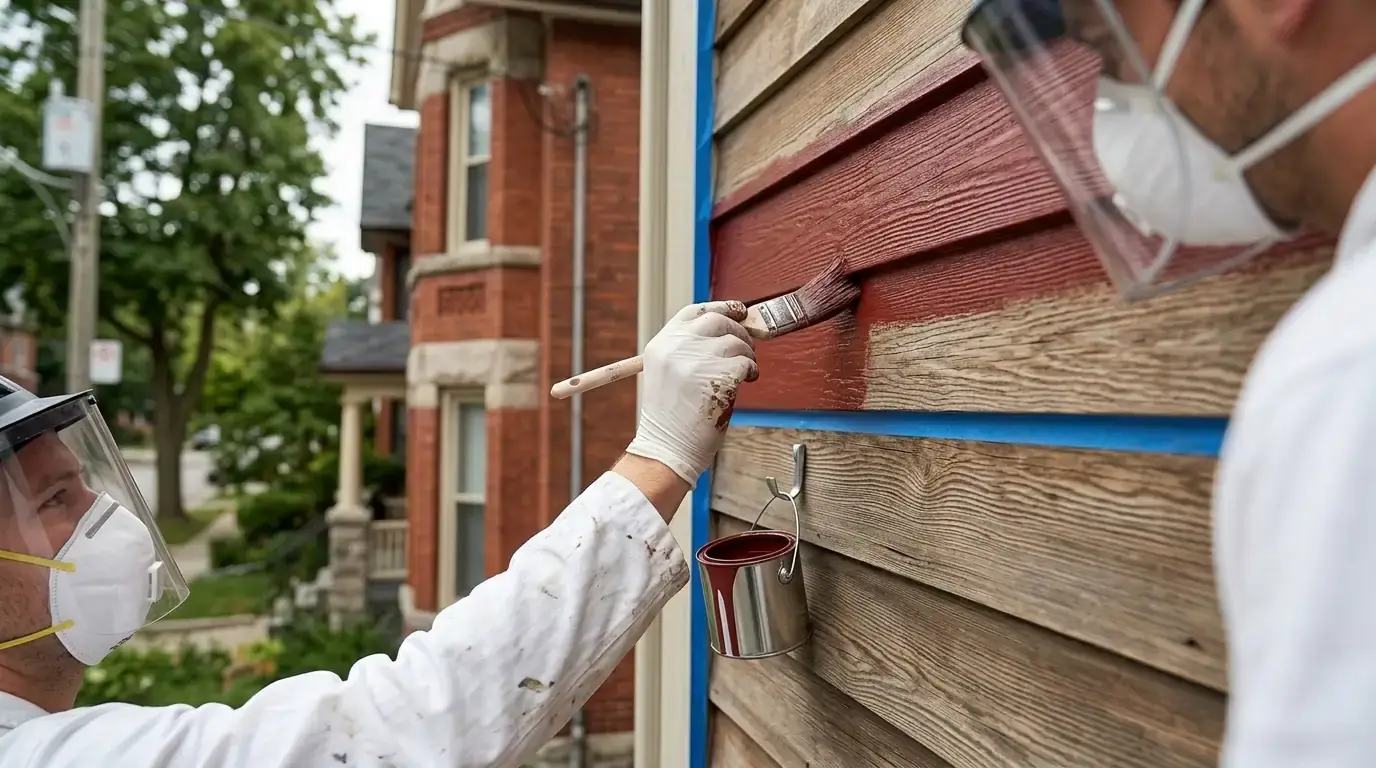
Wood moves as moisture and temperature change. Joints open, end grain absorbs water, sills sit nearly horizontal, and trim pieces can collect moisture at cut edges. None of that makes painted wood a bad exterior material, but it does make maintenance important.
Watch for:
- hairline cracking at joints
- lifting paint along bottom edges
- bare end grain
- failed caulking
- dark moisture staining
- soft spots
- peeling around fasteners
Current Toronto contractor guidance often places painted wood closer to a 5 to 7 year repaint planning range, but condition should still make the final decision.
Masonry Can Last Well, but It Hates Trapped Moisture
Painted brick, stucco, and concrete need a different maintenance mindset. Efflorescence, cracking, loose coating, and repeated dampness should be investigated before another coat is applied.
Benjamin Moore’s current exterior preparation guidance warns against coating over efflorescence without addressing and removing it. If moisture is moving through masonry, repainting the surface without correcting the source can shorten the new coating’s life.
A masonry wall that is dry and sound may repaint on a very different schedule from a wood sill beside it.
Vinyl and Fibre Cement Need Their Own Product Rules
Painted vinyl and fibre cement can perform well when the existing surface is compatible, cleaned properly, and coated with a product approved for that substrate. Colour choice, manufacturer requirements, and the condition of the original siding all matter.
Do not borrow a wood repaint interval and apply it automatically to vinyl or fibre cement. The materials move, absorb moisture, and hold coatings differently.
Better Paint Helps, but It Cannot Negotiate With Wet Wood
Exterior product quality matters. Current manufacturer literature highlights properties such as UV resistance, flexibility, moisture resistance, mildew resistance, and resistance to peeling or cracking.
Those features can support longer performance when the coating is used correctly. They do not erase poor preparation, active water entry, incompatible old paint, or a substrate that was damp when coated.
If one quote includes major scraping, repair, moisture correction, and appropriate priming while another mainly includes “two coats,” the difference is not just the paint brand.
Application Weather Can Change What Happens Years Later
Exterior coatings need to be applied inside their actual weather limits. Cold surfaces, strong direct sun, rain, dew, high humidity, or excessive heat can affect drying and film formation.
Modern exterior products do not all have the same application temperature or rain-resistance window. Check the exact technical data rather than relying on one generic seasonal rule.
In Ontario, a day that feels pleasant in the afternoon can still have a cold substrate in the morning or dew later in the evening. The coating schedule should follow product instructions and real surface conditions.
Seven Things That Matter More Than the Date on the Old Paint Can
- Peeling: adhesion is failing and more preparation will be needed if it spreads.
- Cracking: exposed edges can admit more moisture and continue opening.
- Blistering: investigate moisture, heat, or adhesion before repainting.
- Chalking: a powdery surface can signal coating degradation and affects preparation.
- Severe fading: one elevation may be aging much faster than the others.
- Failed caulking: open joints around trim and openings can allow water behind otherwise decent paint.
- Exposed substrate: bare wood, metal, or repaired masonry should not wait for the rest of the house to reach a certain age.
Local Maintenance Can Buy Time Before a Full Repaint
Not every exterior defect means the entire house needs to be repainted immediately. If most of the coating is sound, selective maintenance can sometimes protect vulnerable areas while the broader finish still has useful life.
That may include repairing failed caulking, spot priming exposed wood, repainting weathered trim, correcting a gutter leak, or addressing one highly exposed elevation. The existing coating still needs to be compatible and in good enough condition for localized work.
Colour matching can be the limitation. Exterior paint changes with sunlight and weather, so a fresh touch-up may look noticeably different beside an older faded finish. At that point, repainting a full board, trim assembly, wall section, or elevation may look better than trying to hide a small repair with repeated dabs of paint.
Selective maintenance is most useful when it protects the substrate. It should not become an excuse to chase dozens of peeling spots while the entire coating system is failing.
Annual Maintenance Is Cheaper Than Waiting for a Peeling Festival
Once a year, walk the exterior in good daylight. Take photos from the same locations so slow changes are easier to notice.
Pay extra attention to:
- south and west-facing elevations
- window sills and door trim
- fascia and soffit edges
- bottom edges of wood siding
- gutters and downspouts
- horizontal ledges
- caulking around openings
- masonry cracks and efflorescence
- railings and steps
- areas kept damp by shrubs or irrigation
A small failed joint or bare patch is easier to repair before it becomes a wall-wide scraping project.
What Usually Shortens Exterior Paint Life
Exterior coatings often fail earlier than expected when several small problems pile up:
- wet or dirty substrate at the time of painting
- loose old coating left underneath
- water entry that was never corrected
- wrong product for the substrate
- bare areas not primed where the system required it
- painting outside product weather limits
- failed caulking left open
- ignoring local failures until they spread
If you are deciding how often repaint house exterior Ontario properties, inspect condition first. Age is useful as a reminder that the inspection is overdue, not as permission to ignore what the surface is already showing you.
Questions Homeowners Ask When the Paint Is “About That Age”
What exterior paint lifespan should I plan for in Ontario?
A broad 5 to 10 year maintenance window is reasonable for many homes, with current Sherwin-Williams guidance placing general exterior paint life around 7 to 10 years depending on climate, surface material, and paint quality. Exposed wood and trim can need attention sooner.
Why is one side of my house fading faster?
Sun, rain, shade, wind, vegetation, and surface temperature vary by elevation. A south or west wall can receive stronger UV exposure, while a shaded wall may stay damp longer.
Should faded paint be repainted if it is not peeling?
It can be repainted for appearance, but fading alone is different from adhesion failure. Inspect for chalking, cracks, open joints, exposed material, and moisture before deciding how urgent the work is.
Can I paint directly over peeling exterior paint?
No. Loose material should be removed, the cause of failure investigated, edges prepared, damaged substrate repaired, and bare areas primed where the coating system requires it.
Does exterior paint last longer on brick than on wood?
It can, but there is no universal rule. Masonry performance depends heavily on moisture and surface condition, while painted wood usually needs closer monitoring because of movement, joints, and exposed end grain.
Does premium paint guarantee a longer repaint cycle?
No. Higher-quality exterior coatings can offer useful weathering properties, but they cannot compensate for active leaks, wet substrate, poor adhesion, or weak preparation.
What is the best way to know when repainting is actually due?
Inspect the exterior annually. Peeling, cracking, blistering, bare substrate, failed caulking, severe fading, and recurring moisture problems are more useful triggers than the calendar alone.
Let the Surface Make the Final Call
So, how long does exterior paint last Ontario? For many properly prepared systems, several years and often something in the 7 to 10 year range is a useful expectation. But the coating condition matters more than the birthday.
For broader exterior preparation and coating planning, see exterior painting in Toronto.
If you are seeing peeling, exposed wood, failed caulking, or uneven weathering and want the exterior assessed before deciding how much to repaint, you can request a quote through PaintersInToronto.ca. The site works exclusively with one licensed and insured independent painting company, and any service agreement is directly with that contractor. Call (647) 532-9046 and Ask for SUNNY.