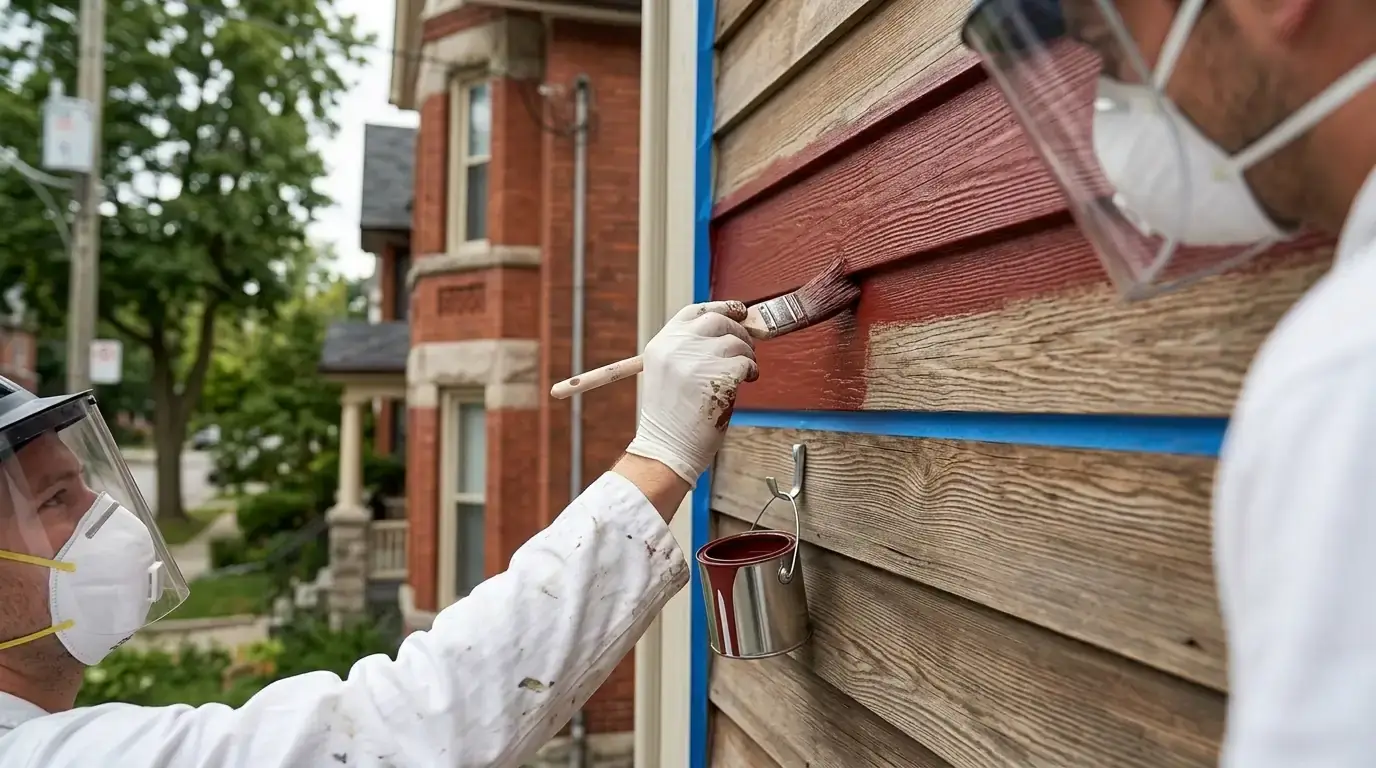
For anyone asking about the best time to paint exterior house Ontario, the practical answer is late spring through early fall, most often from May through October in the Toronto area. The exact day matters more than the month. Exterior paint needs a clean, dry surface, suitable air and surface temperatures, manageable humidity, and enough rain-free time to dry. Always follow the label and technical data sheet for the exact coating being used, because low-temperature products and standard exterior paints can have different limits.
Toronto climate normals help explain why this window is useful. Environment and Climate Change Canada lists an average last spring frost of April 27 and an average first fall frost of October 20 for its 1991 to 2020 Toronto station. Those dates are planning context, not permission to paint. A frost-free day can still be too wet, too hot, too windy, or too close to rain for a successful exterior finish.
Best Time to Paint Exterior House Ontario: The Reliable Window
For most Toronto and southern Ontario homes, the most dependable exterior painting period begins after cold nights become less common and continues until overnight temperatures start falling sharply again. May, June, September, and early October often provide comfortable working conditions, while July and August can also work when crews avoid excessive heat, direct sun, sudden storms, and very humid periods.
For a related next step, read Painters in Waterloo Ontario.
The best day usually has all of the following:
- A completely dry surface with no dew, frost, or recent rain trapped in porous materials.
- Air and surface temperatures within the coating manufacturer’s stated application range.
- A forecast that provides enough dry time before rain, heavy dew, or a major temperature drop.
- Moderate humidity so waterborne paint can dry and form a proper film.
- Manageable wind that will not carry dust, debris, overspray, or leaves onto wet paint.
- Safe access for ladders, lifts, and exterior preparation work.
Calendar months are only a starting point. A clear day in late April may be suitable for a specific low-temperature coating, while a hot July afternoon on a dark south-facing wall may be a poor choice. The product label, the surface temperature, and the short-term forecast should make the final decision.
Temperature and Humidity: What Exterior Paint Needs
There is no single temperature number that applies to every exterior coating. Benjamin Moore’s current exterior temperature guide says some exterior painting can be planned between about 1.7 C and 37.8 C when humidity is low. Its general house-exterior guidance also recommends avoiding application below 4.4 C, while individual low-temperature products may carry their own limits. This is why a painter should check the exact can label and technical data sheet rather than relying on a general rule.
A more conservative planning range is often easier for homeowners: mild conditions where both the air and the surface stay comfortably within the chosen product’s range during application and early drying. A wall can be hotter or colder than the air. Dark siding in direct sun can heat up quickly, and shaded masonry may stay cool and damp long after the rest of the property looks dry.
Surface temperature matters as much as air temperature
Paint is applied to the surface, not to the weather app. Before work begins, the painter should check siding, wood trim, stucco, brick, metal, or another substrate directly. Morning shade, afternoon sun, wind exposure, and building orientation can create very different conditions on separate sides of the same house.
Humidity changes drying time
High humidity slows evaporation from many waterborne paints. That can extend dry and recoat times and make the fresh coating more vulnerable to dew or rain. Very dry, hot, or windy conditions can also be difficult because the paint may dry too quickly for proper flow and a uniform finish. There is no universal humidity percentage that is correct for every product, so the technical data sheet and current conditions should guide the schedule.
Rain-free time must cover more than application
Stopping before rainfall is not enough. Fresh paint needs the manufacturer’s required drying window after application. Some products develop early moisture resistance faster than others, but that does not create a universal rain rule. Check the forecast for rain, fog, heavy dew, and falling overnight temperatures, then compare that forecast with the selected coating’s instructions.
Homeowners can review current manufacturer guidance in Benjamin Moore’s exterior painting temperature guide. The final authority should still be the label and technical data sheet for the exact primer, paint, stain, or specialty coating used on the project.
Month-by-Month Exterior Painting Overview for Ontario
| Period | Typical planning value | Main conditions to check |
|---|---|---|
| March to April | Preparation may begin, but painting days are limited | Cold nights, wet substrates, frost risk, rain, and product minimums |
| May to June | Often a strong painting window in southern Ontario | Spring rain, pollen, damp wood, and sudden temperature changes |
| July to August | Many workable days, with heat management | Direct sun, hot surfaces, humidity, thunderstorms, and wind |
| September to early October | Often an excellent window when nights remain mild | Shorter days, dew, cool nights, falling leaves, and rain |
| Late October to February | Usually unreliable for full exterior house painting | Cold surfaces, frost, snow, moisture, short daylight, and limited curing time |
March and April
Early spring can be useful for inspections, estimates, colour planning, minor repairs, scraping, and scheduling. Actual painting is more weather-sensitive. Snowmelt, repeated rain, frost, and cold surfaces can leave wood and masonry damp even when the afternoon feels comfortable. The Toronto average last spring frost of April 27 shows why overnight conditions still deserve attention.
A suitable late-April day is possible, especially with a coating approved for lower temperatures, but the surface must be dry and the forecast must stay within the product’s limits during drying. Do not treat one warm afternoon as proof that the full project is ready.
May and June
May and June often provide the best weather for exterior painting Ontario homeowners can use for siding, trim, doors, stucco, and other residential surfaces. Temperatures are usually milder than midsummer, daylight is long, and overnight cold becomes less frequent. Spring rain and damp materials remain the main concerns.
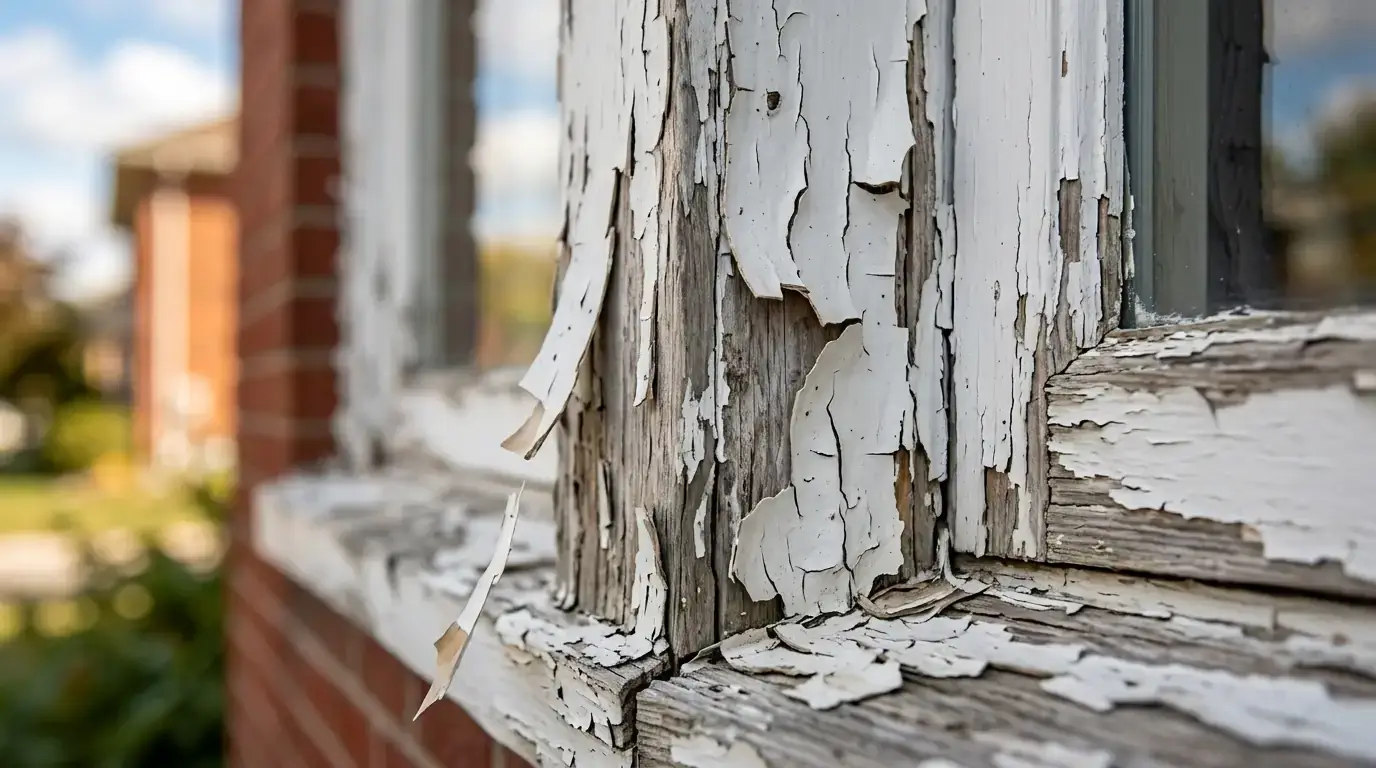
Preparation still comes first. Peeling paint, failed caulking, soft wood, mildew, chalking, and moisture problems must be handled before coating. Painting over damp or poorly prepared surfaces can shorten the life of the finish even when the day itself feels ideal.
July and August
Summer offers long days and many dry periods, but the hottest part of the day may not be the best painting time. Direct sun can make dark siding, metal, or masonry much hotter than the reported air temperature. Crews may work around the building, following shade and avoiding surfaces that are excessively hot.
Humidity and sudden thunderstorms also matter. A morning that begins dry can change quickly. Experienced planning includes checking hourly forecasts, surface temperatures, wind, and the time required for the coating to resist moisture.
September and early October
Early fall can be one of the strongest choices for exterior painting spring vs fall Ontario homeowners are comparing. Daytime heat is usually less intense, humidity may be more manageable, and surfaces can remain comfortable for application. The main limitation is the shorter drying window.
Morning dew may keep surfaces wet later in the day, while temperatures can fall quickly after sunset. Environment and Climate Change Canada’s Toronto normals list October 20 as the average first fall frost. That does not mean every day before October 20 is safe or every day after it is unusable. It means the risk of cold nights deserves increasing attention as fall advances.
Late October through winter
Late-season work becomes highly product-specific and forecast-dependent. Short days, cold surfaces, frost, snow, moisture, and repeated freeze-thaw conditions make full exterior house painting difficult to schedule reliably. Small protected areas may sometimes be coated under controlled conditions with a suitable product, but that is different from treating winter as a normal exterior painting season.
Why Winter Exterior Painting Is Usually Not Practical in Ontario
Winter is not simply a colder version of summer painting. Several problems can occur at the same time:
- The surface may be below the coating’s minimum temperature even when the air briefly rises above it.
- Frost, snow, condensation, or trapped moisture can prevent proper adhesion.
- Short daylight reduces the safe working and drying window.
- Temperatures can fall below the product limit soon after application.
- Freeze-thaw cycles can expose weak preparation, cracked caulking, and moisture entry.
- Ladders, roofs, walkways, and access areas may be unsafe.
So, can you paint exterior in winter Ontario? Occasionally, a narrow repair or protected commercial task may be possible with controlled heat, enclosure, ventilation, and a coating approved for the conditions. For a normal occupied home exterior, waiting for a stable seasonal window is usually the safer and more practical choice.
How to Choose the Right Painting Day
- Identify the exact surface. Wood siding, brick, stucco, metal, vinyl, doors, and trim can require different preparation and coatings.
- Select the product before relying on a temperature number. Read the label and current technical data sheet for minimum and maximum air and surface temperatures.
- Check the surface for moisture. Recent rain, washing, morning dew, shade, and porous materials can delay the start.
- Review the hourly forecast. Look beyond the daytime high. Check overnight lows, rain, humidity, wind, fog, and dew risk.
- Plan around sun exposure. Avoid coating a surface that is becoming too hot in direct sun or cooling rapidly near evening.
- Allow the full drying window. Leave enough suitable weather after application for the coating to dry as specified.
- Recheck conditions during the job. Weather and surface temperatures can change between coats and around different sides of the house.
Environment and Climate Change Canada’s Toronto climate normals are useful for long-range seasonal planning. For the actual work date, use a current local forecast and the selected coating’s instructions.
Common Timing Mistakes to Avoid
Starting as soon as the air feels warm
Air temperature alone does not confirm that the surface is dry or warm enough. Shaded walls, wood, and masonry can lag behind the air temperature.
Painting too early after washing or rain
Exterior washing and repairs are valuable, but they can introduce moisture. The surface must dry properly before primer, paint, or stain is applied.
Ignoring overnight conditions
A pleasant afternoon can be followed by heavy dew or a rapid temperature drop. The drying period after application is part of the painting window.
Following a generic temperature rule
Different products have different application ranges. A low-temperature exterior coating does not make every primer, caulk, patching compound, or topcoat suitable for the same conditions.
Painting a wall in intense direct sun
The surface may be far hotter than the reported air temperature. Excessive heat can make application and film formation harder, especially on dark colours and metal.
What to Do If You Miss the Exterior Painting Season
Missing the ideal window does not mean the project has to stop completely. Use the colder months to inspect the exterior, identify repairs, choose colours, review access, request estimates, and reserve a suitable spring date. Urgent water entry, rot, loose materials, or safety concerns should be assessed separately rather than covered with paint.
You can also prioritize work. A failing door or small trim area may need attention before the full house. A professional can determine whether a temporary repair is sensible or whether the surface should wait for better conditions.
For more information about preparation, surfaces, and service planning, see the exterior painting Toronto service page. Homeowners planning broader interior and exterior work can also review residential painting in Toronto and Ontario.
Frequently Asked Questions
Can you paint the exterior of a house in winter in Ontario?
Full exterior house painting is usually unreliable in an Ontario winter because surfaces may be cold, damp, frosted, or exposed to snow and rapid temperature changes. A limited protected task may be possible with controlled conditions and a suitable coating, but the product instructions and actual surface temperature must support the work.
What temperature is too cold to paint outside in Ontario?
There is no universal cutoff for every product. Some current exterior coatings are rated for application as low as about 1.7 C, while other manufacturer guidance and technical data sheets use a 4.4 C minimum or higher. Check both the air and surface temperature and follow the exact product label.
Is fall a good time to paint a house exterior in Toronto?
Yes, early fall can provide excellent conditions when surfaces are dry, daytime temperatures are mild, and overnight temperatures remain within the coating’s range. Watch for morning dew, shorter daylight, rain, falling leaves, and colder nights as October progresses.
How long does exterior paint need to dry before rain?
The required rain-free time depends on the exact primer or paint, the surface, temperature, humidity, film thickness, and application method. Use the current technical data sheet rather than a single general number. Schedule enough dry weather for the product’s stated drying and early moisture-resistance period.
Is spring or fall better for exterior painting in Ontario?
Both can work well. Late spring offers longer daylight but may bring frequent rain and damp surfaces. Early fall often has comfortable temperatures but shorter drying windows and colder nights. The better choice is the period that offers stable, dry conditions for the specific property and coating.
Plan Around the Forecast, Not Just the Month
The best time to paint exterior house Ontario properties is normally from late spring through early fall, but the safest decision comes from combining the calendar with the product instructions, surface condition, and current forecast. May through October is a useful Toronto planning window, not a guarantee. A dry surface, suitable temperature, moderate humidity, manageable sun and wind, and enough drying time are what make a day workable.
To discuss timing for a Toronto, GTA, or Ontario property, Request a Free Quote through PaintersInToronto.ca. The site works exclusively with one licensed and insured independent painting company, and any service agreement is directly with that contractor. Call (647) 532-9046 and Ask for SUNNY.