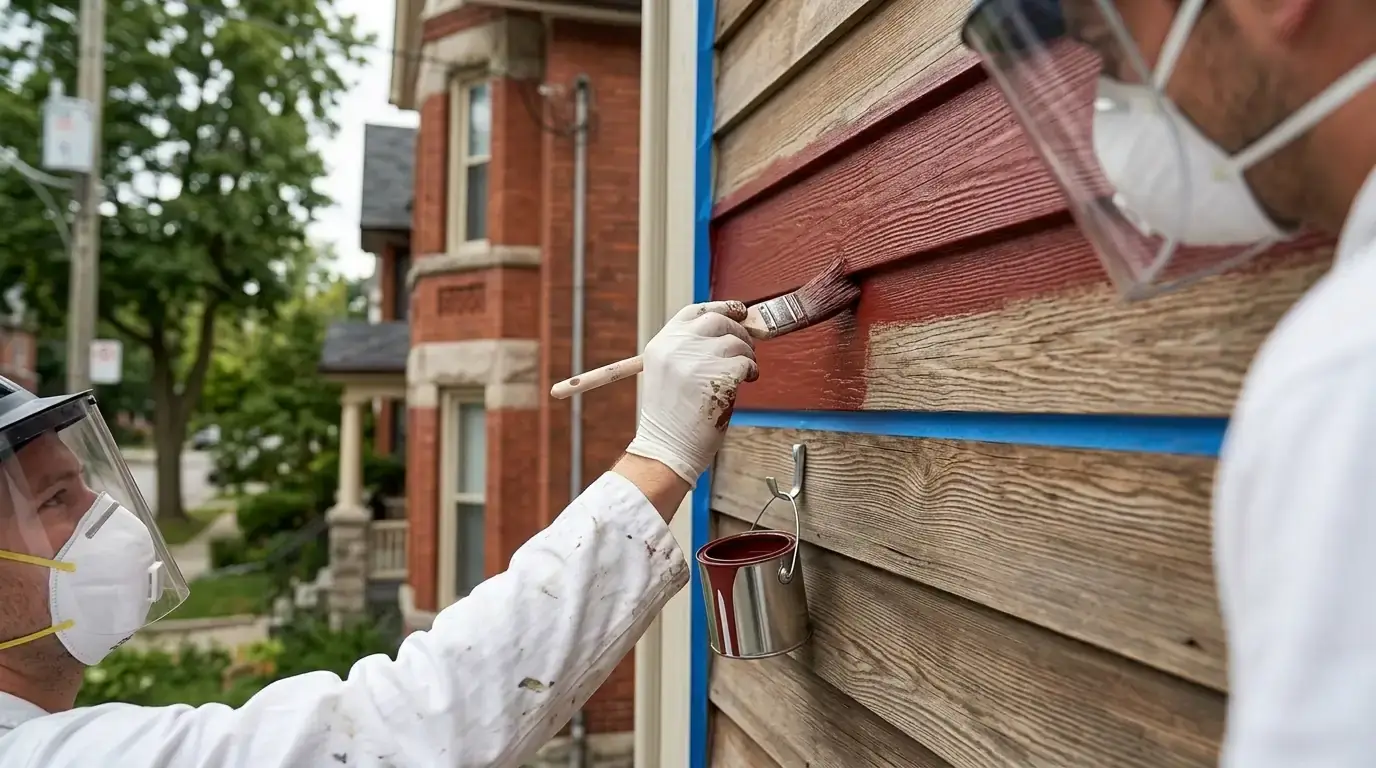
For exterior painting Toronto before winter, book the assessment as early as possible and approve each workday from the exact coating data sheet, surface condition, moisture, dew point, rain forecast, and overnight temperature. Do not choose a date only because the afternoon high looks warm. The surface and fresh coating must remain within the product’s limits for the required drying and recoat period.
September often provides more reliable working margins. October can still offer usable days for selected products and prepared surfaces. By November, Toronto’s average overnight temperatures are near or below the minimum listed for many exterior coatings, so the available window becomes narrow and unpredictable.
Exterior Painting Toronto Before Winter Uses a Condition Window
| Decision | Conditions | Practical response |
|---|---|---|
| Proceed with planned scope | Dry sound surfaces, product limits met, stable overnight forecast, enough time for all coats | Confirm the sequence and monitor each elevation daily |
| Narrow the scope | Some suitable days remain, but repairs or a full exterior cannot fit safely | Complete priority trim, doors, exposed wood, or one full elevation |
| Postpone coating | Wet surfaces, unresolved damage, cold nights, rain, dew, or insufficient cure window | Complete appropriate assessment and protective repairs, then schedule coating for spring |
A smaller finished section is more useful than a large exterior left partly scraped, spot primed, or between coats when the weather changes.
For a related next step, read Exterior Painting Cost in Toronto, exterior painting cost Toronto.
What Toronto Climate Normals Say About the Fall Window
Environment and Climate Change Canada 1991 to 2020 normals show how quickly the overnight margin changes. At the Toronto City station, the average daily minimum is 13.8°C in September, 7.7°C in October, and 2.3°C in November. Toronto Pearson records 11.6°C in September, 5.3°C in October, and 0.2°C in November.
These are monthly averages, not a schedule for a specific house. Toronto neighbourhoods, elevations, wind exposure, lake influence, shaded walls, and individual weather systems can produce different conditions. A warm October week may be suitable, while a cold wet period in September may not be.
The normals do not create one official last day for painting. They show why the contractor has more flexibility in September, less margin during October, and limited dependable exterior conditions by November.
Review the official Toronto City climate normals and Toronto Pearson climate normals for current official context.
The Minimum Temperature Depends on the Exact Product
There is no universal minimum for all exterior paint. Benjamin Moore Canada’s current temperature guide gives a broad planning range from 1.7°C to 37.8°C and tells painters to use the exact product label or technical data sheet. Its general home exterior guide advises avoiding painting below 4.4°C. AURA Exterior currently lists low-temperature application down to 1.7°C.
Sherwin-Williams also identifies selected exterior products that can be applied as low as 1.7°C. That does not make every primer, caulk, patch, paint, and finish suitable at the same temperature.
Before scheduling, record:
- The primer, patching material, caulk, and finish product
- The minimum air and surface temperature for each
- The required temperature during drying and curing
- Dry and recoat times at the expected conditions
- Humidity and dew point limits
- Rain or moisture resistance timing
- Application restrictions for the actual siding, wood, masonry, metal, or stucco
The most restrictive layer can control the schedule. A low-temperature finish paint does not help when the primer or caulk needs warmer conditions.
Check the Surface Temperature, Not Only the Weather App
Air temperature and surface temperature can be different. A shaded north wall may stay cold after the air warms. Dark siding in direct sun can become much warmer than the reported temperature. Metal trim can respond quickly to changing sun and wind.
Benjamin Moore Canada recommends measuring the surface when conditions are uncertain. The company also advises painting on a surface more than 5°C above the dew point. That margin helps reduce condensation risk.
For every work area, check:
- Air temperature
- Surface temperature
- Paint and material temperature
- Relative humidity
- Dew point
- Recent rain or washing
- Expected evening and overnight low
- Wind and exposure
Morning dew can keep a surface damp after the sky clears. Painting too early may trap moisture. Starting too late can leave insufficient drying time before evening condensation or falling temperatures.
Inspect the Exterior Before Reserving the Final Dates
Late-season planning should begin with the surfaces, not the colour. Walk around the home and document:
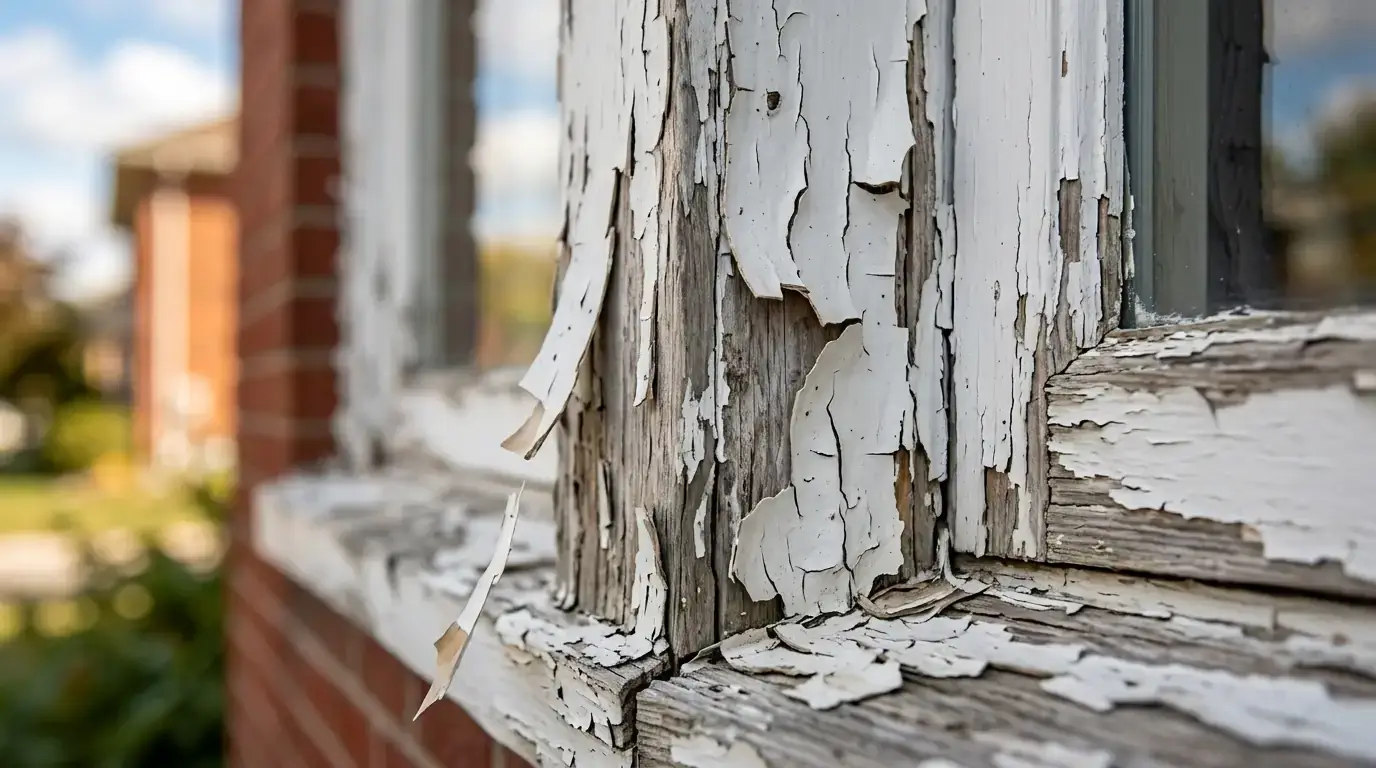
- Peeling, cracking, blistering, or chalking paint
- Bare or weathered wood
- Soft wood, rot, or open joints
- Failed caulking around trim and penetrations
- Stucco cracks and loose repairs
- Efflorescence or moisture staining on masonry
- Rust on metal components
- Blocked access from decks, trees, wires, roofs, or neighbouring property
- Areas that stay shaded or damp
Peeling paint may indicate more than age. Leaks, failed flashing, poor ventilation, trapped moisture, or incompatible previous coatings should be investigated before repainting.
Preparation Can Use Most of the Remaining Weather Window
Homeowners often estimate the project from rolling time and overlook washing, drying, scraping, sanding, repairs, priming, caulking, masking, ladder setup, and recoat intervals.
Benjamin Moore Canada states that the substrate must be fully dry. Its general guidance uses moisture content below 15 percent as an example for wood. The exact surface and product requirements still control.
A late-season sequence may include:
- Clean the selected surfaces.
- Allow the exterior to dry completely.
- Remove loose coating and smooth failed edges.
- Repair damaged wood, stucco, masonry, or trim.
- Prime bare and repaired areas with a compatible exterior primer.
- Apply approved paintable caulk where specified.
- Allow materials to dry or cure.
- Apply finish coats within the product and forecast window.
- Inspect before equipment and protection are removed.
A house that needs significant carpentry or drying may lose its painting window before the coating stage begins.
Sequence the House for Late-Season Work
Do not open every elevation at once. Complete manageable sections so each surface reaches a protected finished condition.
A practical sequence is:
- Start with the highest-priority exposed or failing areas.
- Choose an elevation that fits the forecast and daily sun pattern.
- Complete preparation and primer before expanding the work area.
- Apply the required coats and allow the specified drying time.
- Inspect that elevation before moving to the next section.
- Stop opening new areas when the forecast no longer supports completion.
Follow the sun carefully. Direct sun can overheat dark surfaces, while shade can keep other walls cold and damp. The best starting side can change by time of day.
What to Prioritize When the Full Exterior Will Not Fit
When winter is approaching, reduce the scope based on condition and exposure rather than choosing random visible areas.
Priority candidates may include:
- Bare wood that can be prepared and fully coated within the approved window
- Peeling window and door trim
- Fascia or wood details with coating failure
- Exterior doors that can be completed and cured properly
- One complete weather-exposed elevation
- Small repairs that prevent additional water entry, when appropriate
Some conditions should not be covered quickly. Wet wood, active leaks, loose stucco, failed masonry, extensive rot, and broad coating failure may need repair and drying before paint. The correct decision may be to stabilize the cause and postpone finish coating.
For full service information, visit the exterior painting page.
Final Checks Before Winter
Before closing the project, inspect under daylight and from several angles. Confirm:
- All opened areas received the specified primer and finish coats
- No bare scraped edges remain exposed unintentionally
- Caulk and repairs are complete where included
- Coverage and sheen are consistent
- Windows and doors open correctly
- Paint was removed from glass, hardware, roofs, and adjacent materials
- Tools, masking, debris, and coverings are removed
- Product names, colours, finishes, and dates are recorded
- Deferred repairs and spring work are listed in writing
Frequently Asked Questions
How late can you paint a house exterior in Toronto?
There is no universal final date. September usually offers more margin, October can provide suitable days, and November is much less dependable. The exact product, air and surface temperatures, rain, humidity, dew point, overnight low, preparation, and drying time determine whether work should proceed.
Can exterior painting be done in October in Toronto?
Yes, on suitable days with a compatible product and enough drying time before colder or damp conditions arrive. October is not automatically safe. Check the full forecast and actual surface conditions for every coat.
What is the lowest temperature for exterior painting?
It depends on the product. Some current exterior products list application down to about 1.7°C, while general guidance and other coatings use higher minimums. Check every primer, caulk, repair material, and finish data sheet.
Does the overnight temperature matter after painting?
Yes. The coating may need to remain above its required minimum while it dries or cures. A warm afternoon does not approve the job when temperatures or dew conditions become unsuitable shortly afterward.
Can you paint exterior wood after rain?
Only after the wood is fully dry and meets the selected product requirements. The surface can remain damp after it looks dry, especially in shade or cool fall weather. Moisture should be assessed before priming or painting.
Should peeling exterior paint be covered before winter?
It should be assessed promptly, but loose paint should not simply be covered. Identify moisture or substrate problems, complete appropriate preparation and repairs, and coat only when the full system can be applied within suitable conditions.
What happens if the full house cannot be finished before winter?
Reduce the work to complete priority sections, document deferred areas, and schedule the remaining exterior for a suitable spring window. Do not leave broad surfaces partly prepared or between coats merely to meet a calendar deadline.
Request a Late-Season Exterior Assessment
PaintersInToronto.ca works exclusively with one licensed and insured independent painting company. Any service agreement is directly with that independent contractor. To discuss exterior painting Toronto before winter, Request a Free Quote, call (647) 532-9046, and Ask for SUNNY.