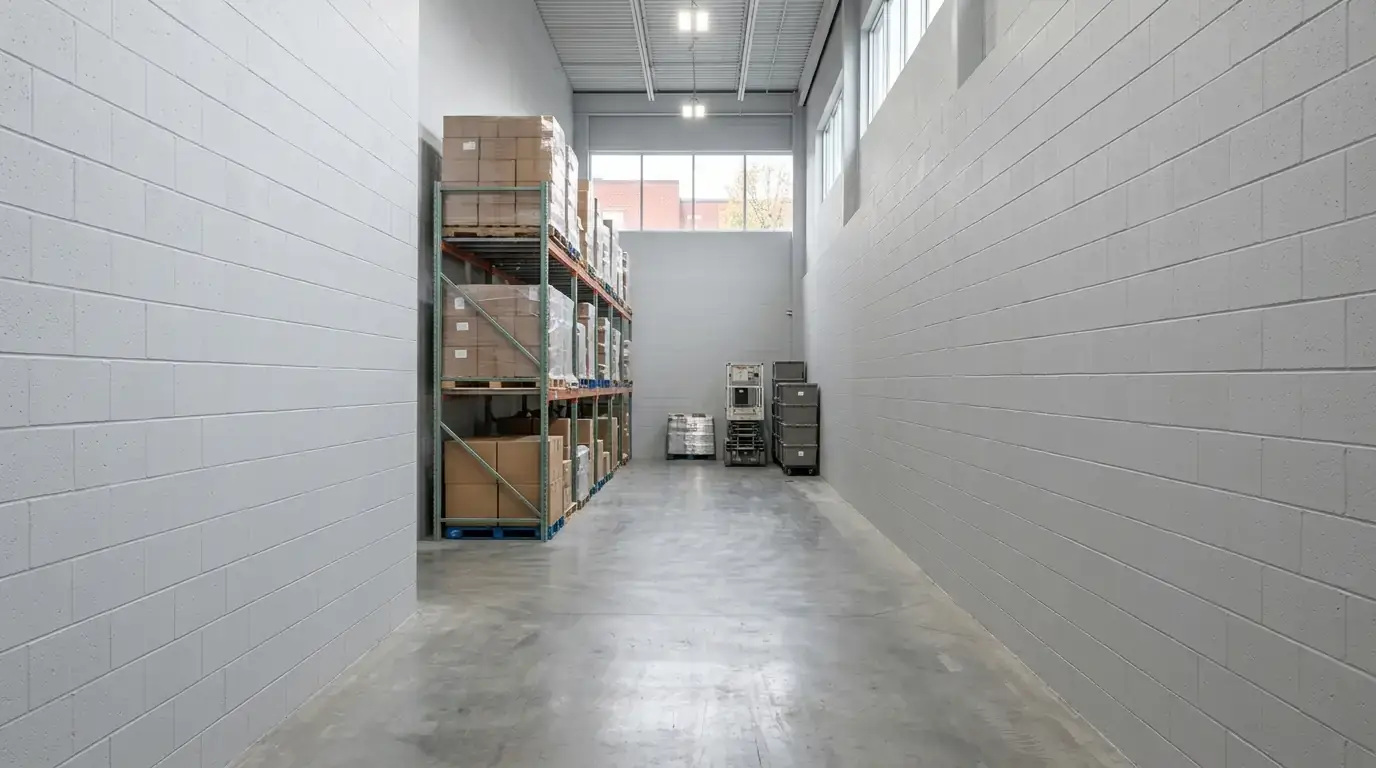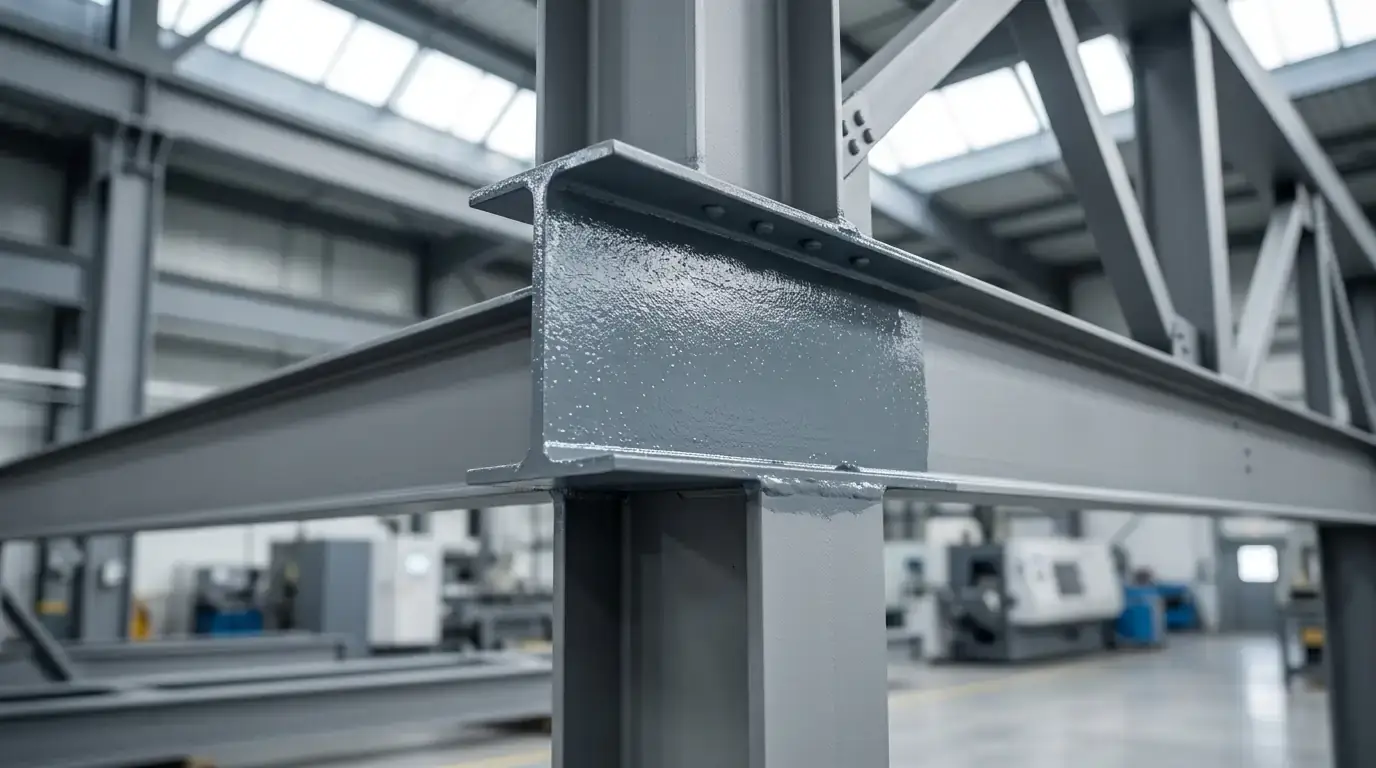
Rust does not care which brand is on the pail. It cares about water, salts, surface preparation, film thickness and whether the coating system actually matches the exposure. A useful structural steel coating rust prevention Ontario plan therefore starts with the steel’s environment. A dry interior beam, a loading-dock column splashed with winter slush and an exterior canopy are three different coating problems even if they are all painted gray.
Current protective-coating manufacturers support several legitimate system paths: lighter-duty rust-inhibitive acrylic primers, high-solids surface-tolerant epoxies for maintenance, and multi-coat zinc-rich primer, epoxy and weather-resistant topcoat systems for harsher service. The specification should be chosen after the facility understands exposure, steel condition, preparation limits, access and downtime.
Map Corrosion Exposure Before You Pick a Coating
Walk the facility and mark where the steel actually gets wet, salted, bumped, washed, heated or chemically exposed. Do not write one coating specification for the entire building simply because the beams came from the same steel mill.
Record exposure to:
- humidity and condensation
- outdoor rain, snow and sun
- de-icing salt tracked in by vehicles
- loading-dock slush and spray
- frequent washdown
- chemical vapours or splash
- abrasion from material handling
- high temperatures
- roof or piping leaks
- areas where insulation may trap moisture
Environment and Climate Change Canada documents large seasonal temperature and precipitation changes in Toronto and confirms widespread road-salt use in Canada. That makes chloride exposure particularly relevant around vehicle entrances, loading docks, parking structures and exterior steel. It does not mean every Ontario facility belongs in one universal corrosion category. The asset has to be assessed where it stands.
Separate Structural Damage From Coating Failure
Paint is a corrosion-control layer. It is not replacement steel.
Before abrasive preparation or recoating, look for deep pitting, section loss, perforation, heavy pack rust, distorted members, cracked welds, loose fasteners and severe corrosion around base plates or connections. If deterioration suggests meaningful loss of steel, the facility’s engineering or structural team should assess it before the problem is treated as a paint job.
A thick epoxy can make a rough surface look better. It cannot put metal back where corrosion removed it.
Write the Surface-Preparation Standard Into the Job
“Remove rust” is too vague for a protective-coating specification. AMPP maintains recognized surface-preparation standards that let the owner, contractor and inspector talk about the same level of cleanliness.
- SSPC-SP 1: solvent cleaning
- SSPC-SP 3: power-tool cleaning
- SSPC-SP 6/NACE No. 3: commercial blast cleaning
- SSPC-SP 10/NACE No. 2: near-white metal blast cleaning
These are not interchangeable. The coating manufacturer, existing condition, exposure and project specification determine which preparation is appropriate.
Current AMPP information also emphasizes surface profile and non-visible contaminants such as soluble salts. That matters because steel can look visually clean and still carry contamination that undermines performance.
Maintenance Work Is Not Always a Full-Blast Project
Some active facilities cannot take every beam to near-white metal. There may be operating equipment, containment limits, production schedules or only a short shutdown window.
Current products such as Sherwin-Williams Macropoxy 646 Fast Cure and PPG AMERLOCK 2 are examples of high-solids, surface-tolerant epoxy products intended for maintenance situations on properly prepared steel. Sherwin-Williams currently describes Macropoxy 646 as suitable for industrial steel and concrete and says it can be applied to marginally prepared steel surfaces.
Surface-tolerant does not mean preparation-free. Loose rust, failed paint, oil, dirt and other contamination still have to be dealt with. The phrase means the product is designed to work in a broader maintenance-preparation window than a system demanding cleaner blast-prepared steel.
Three Coating Paths Cover Very Different Jobs
Rust-inhibitive acrylic primer for lighter service
Sherwin-Williams currently lists Pro Industrial Pro-Cryl Universal Acrylic Primer as a single-component rust-inhibitive and corrosion-resistant primer for construction and maintenance steel. A system in this category can suit selected atmospheric applications where the exposure and performance requirements do not justify a heavy multi-coat system.
High-solids epoxy for maintenance steel
Epoxy mastics can provide strong barrier protection and are common in industrial maintenance. Macropoxy 646 is a current example of a high-solids epoxy designed for steel and concrete in industrial exposure, including maintenance painting. PPG offers comparable surface-tolerant epoxy categories.
These systems are useful where the facility needs substantial barrier protection and the steel can be prepared to the manufacturer’s requirements, but they are not a universal answer for UV exposure, chemical service or every existing coating.
Zinc-rich primer, epoxy and weather-resistant topcoat for harsher exposure
For demanding atmospheric service, a multi-layer system may combine:
- a zinc-rich primer at the steel
- an epoxy intermediate coat for barrier build
- a polyurethane or polysiloxane topcoat where weathering, colour and UV resistance are required
Sherwin-Williams’ current structural-steel guidance describes this system logic. Its Zinc Clad 5, for example, is a zinc-rich primer that the manufacturer says provides cathodic or sacrificial protection to steel. Acrolon 218 HS is a current acrylic polyurethane designed for exterior colour and gloss retention and can be used over compatible organic zinc-rich primers.
PPG publishes similar zinc-rich and epoxy system categories. The point is not that every beam needs three coats. The point is that the exposure should decide the system.
Edges, Welds and Bolts Are Where Specifications Get Real
Broad flat steel is easy to spray. Sharp edges, welds, corners, bolts and crevices are not. These details can end up with less film build and become early corrosion points.
Protective-coating specifications often use a stripe coat on critical geometry before or between full coats, depending on the system. That focused application helps build coverage at:
- weld seams
- sharp edges
- angles
- bolts and fasteners
- corners
- hard-to-reach supports
If rust keeps returning at the same weld while the middle of the beam looks perfect, the lesson is probably not “buy more gray paint.” Inspect preparation, film thickness, water trapping and detail coverage.
Dry Film Thickness Is a Quality-Control Item, Not Trivia
Protective coatings are specified to a dry film thickness, or DFT. Too little film can leave inadequate protection. Excessive film can create its own application and curing problems depending on the chemistry.
The quality plan should identify:
- preparation standard
- exact coating products and components
- target DFT for each coat
- recoat windows
- environmental limits during application
- stripe-coat locations
- inspection method
- repair procedure for holidays, misses or damage
One DFT copied from another job is not a specification. Zinc primers, epoxies, acrylics, polyurethanes and intumescent coatings can have very different requirements.
Ontario Salt Exposure Deserves Its Own Maintenance Map
A rust prevention coating Ontario facility may have excellent interior steel and chronic corrosion in only four places. Map those places.
High-attention zones commonly include loading-bay columns, overhead-door frames, steel near floor drains, parking structures, exterior stairs, platforms, canopies, roof-level steel, washdown areas and members below known condensation or leak points.
Vehicle zones deserve extra attention because chloride-bearing slush can be carried indoors. Salt plus recurring moisture is a very different service condition from a dry mezzanine above an office.
Existing Coatings Need an Overcoat Test
Maintenance repainting often starts with an unknown or aged coating. Before covering it, determine whether it is firmly bonded, brittle, chalking, blistering or chemically compatible with the proposed system.
A small test patch can help confirm adhesion and compatibility before a large overcoat project. If the existing film has widespread adhesion failure, the correct answer may be more removal, not another coating layer.
Check where the rust is appearing too. Rust at pinholes, edges and welds tells a different story from broad underfilm corrosion or peeling between coating layers.
Intumescent Fireproofing Is an Engineered System
Some structural steel is protected by intumescent fire-resistive coating. That material is designed to expand under fire exposure and protect the steel for a tested assembly.
Do not treat it like ordinary industrial steel painting. Primer, intumescent layer and finish coat must remain compatible with the approved fire-protection system. A corrosion-control topcoat chosen in isolation can interfere with that assembly.
Inspection Frequency Should Follow Risk and Condition
No honest universal Ontario repaint interval applies to structural steel. A dry interior beam and a chloride-exposed loading-dock column should not be inspected on the same logic.
Build the maintenance frequency around exposure, coating history, mechanical damage, moisture, chemicals, accessibility and consequence of failure. Photograph recurring locations so changes can be compared over time.
Nine Things to Check on a Steel-Coating Walkthrough
- Rust bleed-through: isolated spots or a spreading pattern?
- Edges and welds: thin film, cracks or recurring rust?
- Column bases: standing water, salts, chemicals or impact?
- Bolts and crevices: trapped moisture or pack rust?
- Blistering and peeling: failure within the coating or at the steel?
- Mechanical damage: forklift, pallet or maintenance impact?
- Exterior chalking or fading: topcoat weathering?
- Leaks and condensation: source corrected before touch-up?
- Pitting: is section loss progressing enough to require engineering review?
Application Conditions Can Defeat a Good Steel System
Even a strong coating specification can fail if it is applied outside the product’s environmental limits. Steel temperature, air temperature, humidity, condensation and dew point all matter to industrial coating work. A surface that looks dry can still be too close to the dew point for the selected product.
The project specification should state how environmental conditions are checked and recorded before and during application. Follow the current product data for minimum and maximum temperatures, humidity, surface condition and recoat windows. Do not borrow a temperature limit from another coating in the system.
Exterior and semi-exterior Ontario work deserves particular attention during shoulder seasons, when daytime air can warm quickly while the steel remains cold. Condensation can appear on the member even when the weather seems pleasant from the ground.
Salt Contamination Can Be Invisible After the Orange Rust Is Gone
Loading docks and vehicle areas may be exposed to de-icing chlorides. Abrasive cleaning can remove visible corrosion without necessarily answering whether soluble salts remain on the surface. AMPP’s surface-preparation work includes evaluation of non-visible contaminants such as soluble salts for this reason.
Where chloride exposure is suspected, the specification may need a cleaning and verification strategy suited to the coating system. Otherwise a freshly prepared beam can carry contamination into the new coating film and develop premature blistering or corrosion. The exact testing threshold and treatment should come from the project and coating specification, not from a generic Ontario number.
Facility-Manager Questions About Structural Steel Coatings
What system is commonly used on structural steel?
Depending on exposure, it can range from a rust-inhibitive primer and compatible topcoat to a surface-tolerant epoxy maintenance system or a zinc-rich primer, epoxy intermediate and weather-resistant finish system.
Why use zinc-rich primer?
Current manufacturer guidance describes zinc-rich primers as providing sacrificial corrosion protection as well as barrier protection to steel.
Does rusty steel always need abrasive blasting?
No. Some maintenance systems are designed for appropriately prepared steel where complete blasting is impractical. More severe-service specifications may require higher degrees of blast cleaning.
What does surface-tolerant epoxy mean?
It means the product is designed for certain properly prepared maintenance surfaces. It does not mean oil, loose rust, failed paint and contamination can be ignored.
Why does rust return at welds first?
Welds, edges, bolts and corners are harder to coat uniformly and can receive lower film build. Stripe coating is one technique used to improve coverage there.
How often should steel coatings be inspected?
Use a risk- and condition-based schedule. High-moisture, chloride, exterior, chemical and impact zones deserve closer attention than protected dry steel.
Can ordinary industrial paint go over intumescent fireproofing?
Not automatically. The fire-protection system has tested compatibility requirements that must be preserved.
Make the Specification Specific Enough to Inspect
A dependable structural steel coating rust prevention Ontario program connects exposure, steel condition, preparation, coating system, film thickness and inspection. If the specification only says “paint the steel,” nobody has defined what success looks like. Rust loves vague paperwork almost as much as it loves salt water.
For broader facility coating planning, see industrial painting in Toronto.
If structural steel needs coating or maintenance review, Request a Free Quote through PaintersInToronto.ca from one licensed and insured independent painting company. Any service agreement is directly with that contractor. Call (647) 532-9046 and Ask for SUNNY, or use the contact page.