The most common mistake when estimating industrial painting costs Ontario facilities may face is multiplying the building’s floor area by one generic rate. Industrial work is priced from the actual paintable surfaces, their condition, preparation, coating system, height, access, protection, operational restrictions, and number of mobilizations.
For early planning, standard commercial and industrial painting commonly falls around CAD $2 to $6 per square foot of paintable surface. Warehouse and industrial interior scopes are often around CAD $3 to $6.50 or more. Many professionally installed epoxy floor systems fall around CAD $4 to $12 per square foot, while heavy-duty industrial resin systems may fall around CAD $8 to $15 per square foot or more.
These are ballpark estimates only. The actual price may be lower or higher after the property, surfaces, preparation, access, materials, size, timing, operations, repairs, and complete scope are reviewed.
For a related next step, read Exterior Painting Cost in Toronto, exterior painting cost Toronto.
Industrial Painting Costs Ontario Facilities Should Budget by Scope
Industrial painting covers several different types of work. A facility may need only walls and ceilings, or it may include structural steel, concrete floors, equipment bases, exposed deck, pipes, doors, safety lines, exterior metal panels, and corrosion-control systems.
Use these broad 2026 planning bands as a starting point:
- Standard commercial or industrial walls: Approximately CAD $2 to $6 per square foot of paintable surface when preparation and access are manageable.
- Warehouse or industrial interiors: Approximately CAD $3 to $6.50 or more per paintable square foot when high ceilings, equipment protection, active operations, and industrial preparation are included.
- Commercial epoxy floors: Approximately CAD $4 to $12 per square foot for many professionally installed systems.
- Heavy-duty industrial resin floors: Approximately CAD $8 to $15 per square foot or more where greater build, chemical resistance, repairs, aggregate, moisture work, or specialized performance is required.
- Protective steel and specialty coatings: Commonly scope-priced because blasting, rust condition, geometry, access, containment, primer type, intermediate coats, topcoat, and required film thickness vary significantly.
The ranges overlap because system labels are not complete specifications. A simple epoxy sealer over sound concrete is not comparable with a multi-layer broadcast floor in a chemical or forklift area. Standard acrylic wall paint is not comparable with a zinc, epoxy, and polyurethane system on structural steel.
Measure Paintable Surface, Not Only Building Size
A 50,000 square foot warehouse does not automatically contain 50,000 square feet of painting work. The floor area may be one quantity, while walls, ceilings, exposed steel, columns, pipes, doors, and exterior panels add separate measured surfaces.
Before requesting a budget, list each scope independently:
- Interior wall area
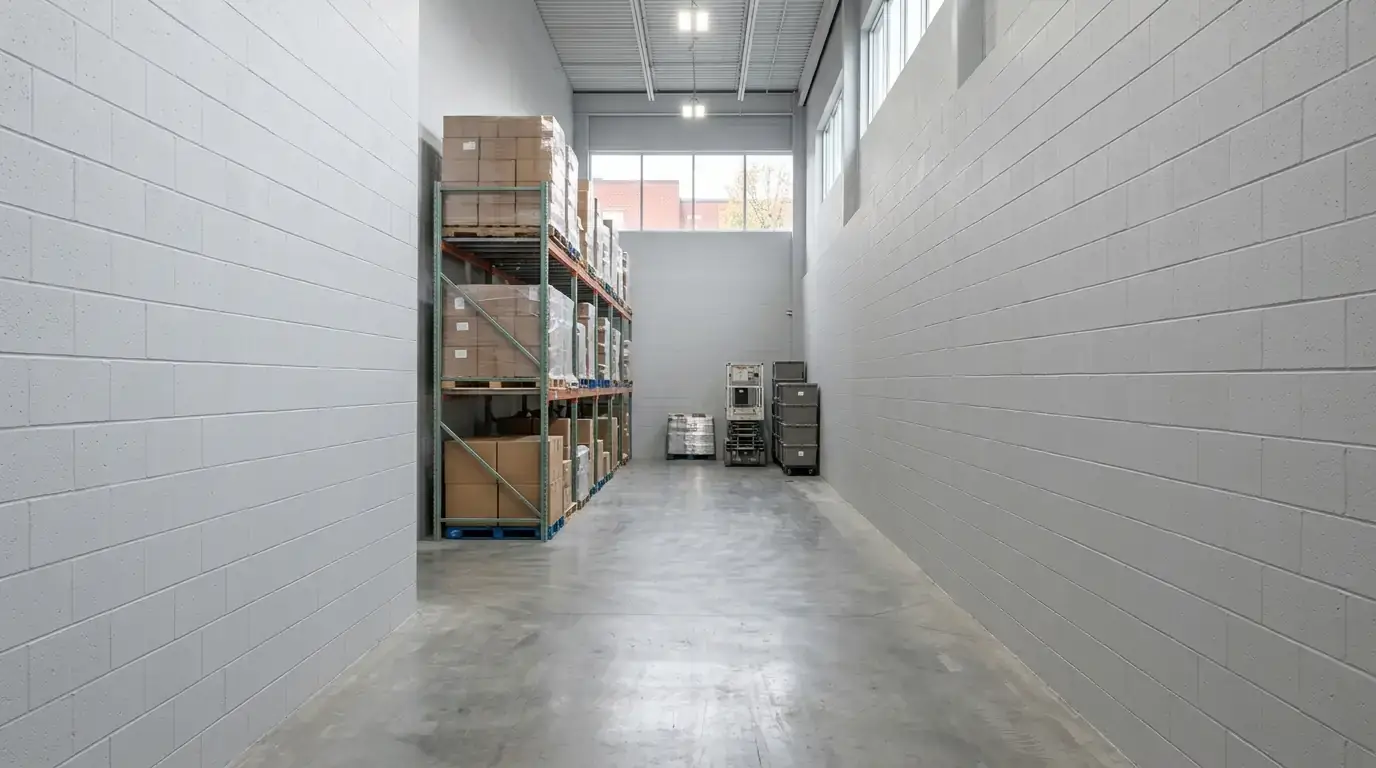
- Concrete block or masonry walls
- Ceilings and exposed steel deck
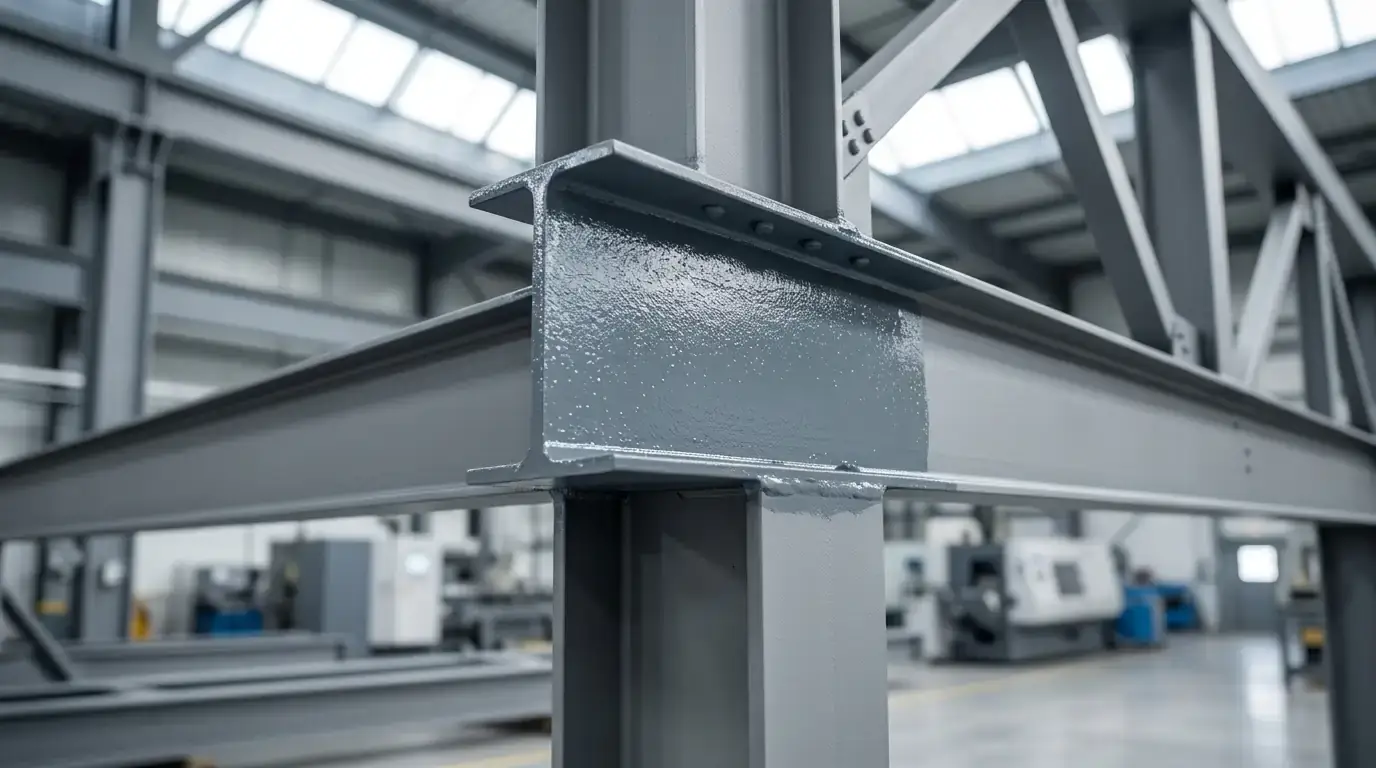
- Beams, joists, columns, and structural steel
- Doors, frames, guards, railings, and bollards
- Concrete floor areas
- Equipment bases and curbs
- Pipes, ducts, and selected mechanical surfaces
- Exterior walls, metal panels, masonry, and trim
- Safety lines, traffic markings, labels, and colour zones
High-open ceilings and structural steel have far more surface area than their floor footprint suggests. Complex geometry also slows application. A square metre of flat wall is more efficient than the same measured area spread across pipes, beams, angles, fasteners, and connections.
Surface Condition Is the First Major Price Driver
Current Sherwin-Williams and Sika guidance requires industrial substrates to be clean, sound, dry, and free of contaminants. The labour needed to reach that condition can be greater than the labour needed to apply the coating.
Preparation may include:
- Pressure washing or detergent cleaning
- Degreasing oil-contaminated areas
- Removing dust, residue, and process contamination
- Scraping or mechanically removing failed paint
- Grinding or shot blasting concrete
- Abrasive blasting or power-tool cleaning steel
- Treating rust and corrosion
- Repairing cracks, spalls, joints, and damaged concrete
- Removing incompatible sealers or old coatings
- Testing moisture and evaluating vapour transmission
- Priming bare, repaired, stained, or exposed areas
A clean, empty warehouse with sound existing coating can fall near the lower part of a planning range. A facility with peeling paint, oil contamination, corrosion, weak concrete, moisture, and several previous coating layers can move well above it.
Standard Paint and Industrial Coating Systems Are Not Equivalent
Standard wall and ceiling paint
Interior acrylic or similar commercial coatings may be appropriate for offices, dry warehouse walls, finished drywall, masonry, and lower-exposure areas. Cost is driven by cleaning, repairs, height, coat count, colour change, masking, equipment, and whether the facility remains active.
Epoxy floor systems
An epoxy floor may include concrete preparation, crack and spall repair, primer, body coat, aggregate broadcast, topcoat, texture, line marking, and cure time. Sherwin-Williams notes that resinous flooring systems commonly range widely in thickness, reflecting the difference between a thin coating and a heavy-duty floor build.
Current Ontario guidance places many heavy-duty industrial floor systems above basic commercial epoxy pricing. Forklifts, turning traffic, chemical exposure, washdown, temperature, moisture, and slip-resistance requirements affect the system.
Protective steel systems
Sherwin-Williams describes structural steel protection as a possible multi-layer system with zinc-rich primer, epoxy intermediate coat, and polyurethane or polysiloxane topcoat. The correct combination depends on corrosion exposure, interior or exterior use, chemicals, UV, required durability, maintenance cycle, and substrate preparation.
Steel coating cost can be driven by blasting or power-tool cleaning, containment, lift access, complex geometry, overspray control, stripe coating on edges and connections, coat thickness, inspection, and curing conditions.
Specialty industrial coatings
Food, water, wastewater, chemical, battery, manufacturing, and high-temperature areas may need specific resin, lining, antimicrobial, chemical-resistant, or thermal systems. These should be priced against an approved specification rather than compared with ordinary wall paint.
Access and Height Affect Labour and Equipment
Industrial surfaces are often above racks, conveyors, production lines, tanks, offices, mezzanines, ducts, and equipment. Access may require:
- Scissor lifts or boom lifts
- Scaffolding
- Fall-protection planning
- Spotters or restricted traffic routes
- Rack or inventory relocation
- Protection over machinery and products
- Shutdown of selected equipment
- Night or weekend access
A high ceiling is not priced only by surface area. The crew may spend significant time moving lifts, lowering around obstacles, protecting production equipment, coordinating forklifts, and waiting for safe access.
Operating Conditions Can Change the Price
An empty facility is usually more efficient than an active one. Keeping production, shipping, retail, storage, or maintenance operations running can add phases and repeated setup.
Cost can increase through:
- Evening, overnight, or weekend labour
- Short work windows
- Daily setup, protection, cleanup, and handback
- Repeated mobilization between zones
- Temporary pedestrian or forklift routes
- Dust, noise, odour, or overspray isolation
- HVAC coordination
- Security, escort, sign-in, and alarm procedures
- Service elevator, loading, or parking limits
- Production shutdown or restart requirements
Phasing can reduce business interruption, but it may increase painting cost. Facility managers should compare the coating invoice with the operational cost of a full shutdown.
Material Cost Is Only One Part of the System
Industrial coatings can cost more per unit than ordinary paint, but material price alone rarely explains the final quote. The contractor must also account for:
- Primer, intermediate, and topcoat layers
- Specified dry film thickness
- Coverage loss on rough or porous surfaces
- Aggregate, texture, and broadcast materials
- Mixing, induction, pot life, and waste
- Colour changes and safety markings
- Environmental conditions during application
- Recoat windows and cure time
- Testing, inspection, and documentation
A less expensive product can become more costly when it needs additional coats, slower phasing, more frequent maintenance, or a shorter service cycle. A higher-cost system is not automatically better either. It must be appropriate for the actual exposure and maintenance plan.
Build an Industrial Painting Budget in Seven Steps
- List the surfaces. Separate walls, ceilings, steel, floors, equipment, doors, exterior areas, and markings.
- Measure the paintable area. Do not rely only on building floor area.
- Document existing condition. Photograph corrosion, peeling, contamination, cracks, moisture, old coatings, and difficult access.
- Describe the exposure. Include traffic, chemicals, washdown, temperature, sunlight, abrasion, and cleaning products.
- Set operational limits. Identify shutdown windows, occupied zones, restricted hours, and required reopening times.
- Request a coating system. Ask for preparation standard, primer, intermediate coat, topcoat, coat count, and film thickness where applicable.
- Add a contingency. Hidden corrosion, weak concrete, incompatible old coatings, and contamination may not be fully visible before preparation begins.
How to Compare Industrial Painting Quotes
Do not compare the bottom line until the scopes have been normalized. Confirm that each quotation identifies:
- Measured surfaces and quantities
- Areas included and excluded
- Cleaning and preparation method
- Repair allowance and change-order method
- Primer and coating product names
- Coat count and film thickness where required
- Colours, sheen, texture, and markings
- Lift, scaffolding, containment, and protection
- Working hours and phase plan
- Dry, recoat, and return-to-service assumptions
- Cleanup and waste removal
- Inspection, documentation, and warranty terms
A low quotation may exclude preparation, repairs, lift rental, off-hours work, multiple coats, topcoats, or line marking. A higher quotation may contain a more complete system. The written scope explains the difference.
Common Industrial Budgeting Mistakes
- Using building floor area as the only quantity
- Combining walls, floors, and steel into one unit rate
- Ignoring existing coating removal
- Underestimating contamination and corrosion
- Choosing the coating before documenting exposure
- Forgetting lifts, scaffolding, protection, and containment
- Assuming the facility can remain fully operational without phasing cost
- Comparing quotes with different preparation and coat systems
- Leaving cure time and reopening requirements out of the schedule
Check the Completed Work and Record the Real Cost
After completion, retain the measured quantities, product data sheets, colour information, batch records when provided, preparation documentation, inspection results, photos, and maintenance instructions.
Review:
- Coverage and colour consistency
- Specified coat count and thickness records where applicable
- Edges, welds, bolts, joints, columns, drains, and transitions
- Pinholes, missed areas, runs, contamination, or soft coating
- Line-marking locations and dimensions
- Written return-to-service instructions
- Cleaning and repair procedures
- Deferred areas and future maintenance priorities
Recording the final scope and cost creates a useful benchmark for future maintenance. It is more reliable than carrying one generic square-foot number from project to project.
For related facility services, review the industrial painting page. Current public cost context is also available in the Ontario commercial painting cost guide and the Ontario epoxy flooring cost guide.
Information to Prepare Before the Site Walkthrough
A facility manager can improve estimate accuracy by giving the contractor current floor plans, equipment layouts, operating hours, shutdown limits, coating records, maintenance reports, safety procedures, chemical lists, cleaning products, and photographs of known problem areas. Identify who can answer questions about production, maintenance, health and safety, security, and building systems.
Also confirm whether the quote must separate capital work, maintenance work, optional areas, night shifts, lift rental, coating removal, repairs, line marking, and future phases. Clear bid instructions reduce assumptions and make contractor pricing easier to compare. When the site conditions are uncertain, request allowances or unit rates for hidden corrosion, additional concrete repair, coating removal, and contamination discovered during preparation.
Frequently Asked Questions
How much does industrial painting cost per square foot in Ontario?
Standard commercial and industrial painting commonly falls around CAD $2 to $6 per square foot of paintable surface. Warehouse and industrial interior scopes may be around CAD $3 to $6.50 or more. These are ballpark estimates only and the final price depends on the reviewed surfaces, preparation, access, materials, timing, size, operations, and scope.
How much does industrial epoxy flooring cost in Ontario?
Many professionally installed commercial epoxy systems fall around CAD $4 to $12 per square foot. Heavy-duty industrial resin systems may fall around CAD $8 to $15 per square foot or more. Concrete condition, repairs, moisture, preparation, thickness, chemistry, texture, phasing, and traffic requirements affect the price.
Is warehouse painting priced from the building floor area?
Not reliably. Walls, ceilings, steel deck, beams, columns, doors, floors, and other surfaces should be measured separately. Floor area can support early planning, but it does not equal paintable surface area.
Why does surface preparation cost so much?
Industrial coatings need a clean, sound, dry, compatible substrate. Removing corrosion, failed coating, oil, moisture problems, weak concrete, and contamination can require specialized equipment and labour. Reducing preparation can undermine the entire system.
Why are two industrial painting quotes so different?
The quotes may include different surfaces, preparation standards, coating systems, coat counts, thicknesses, access equipment, working hours, repairs, protection, and exclusions. Compare the written scope line by line before comparing totals.
Request an Industrial Painting Quote
PaintersInToronto.ca works exclusively with one licensed and insured independent painting company. Any service agreement is directly with that independent contractor. To discuss industrial painting costs Ontario facility requirements, Request a Free Quote, call (647) 532-9046, and Ask for SUNNY.