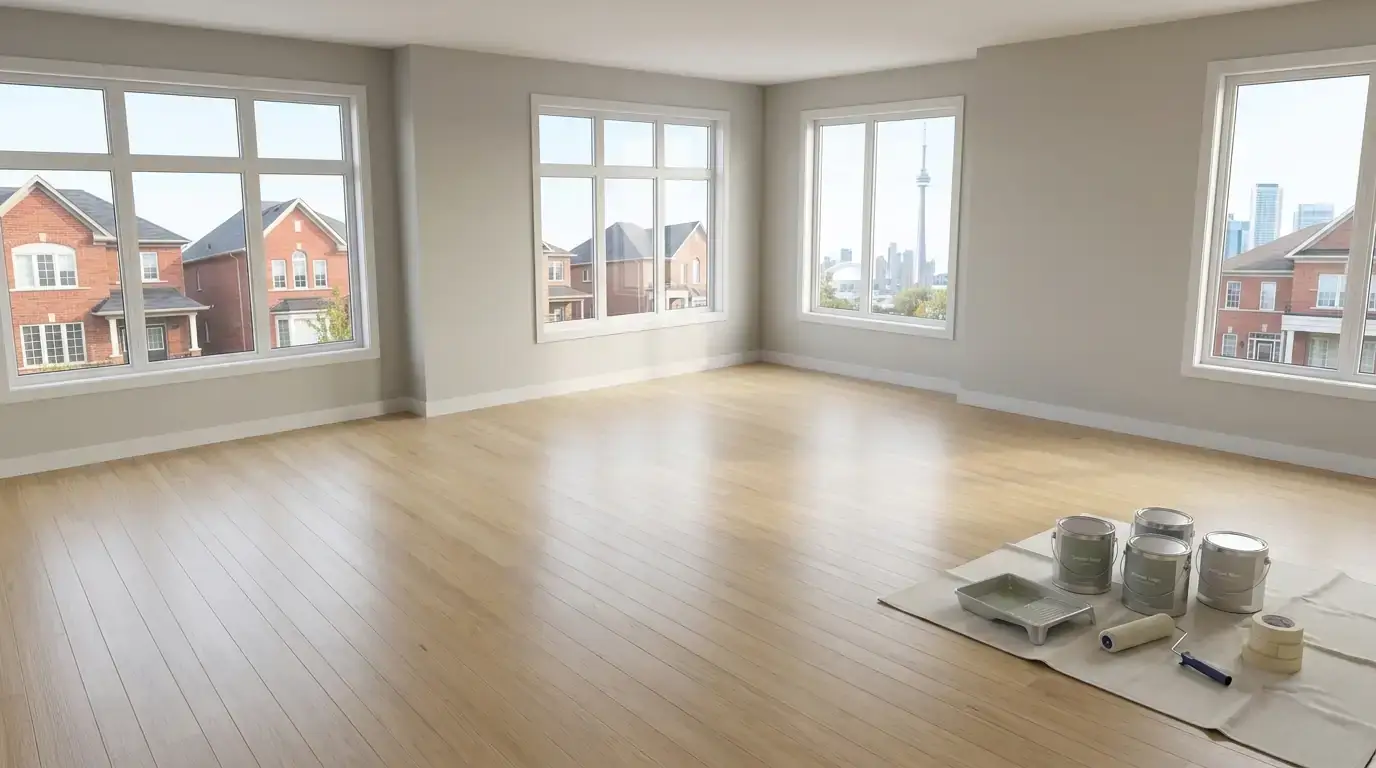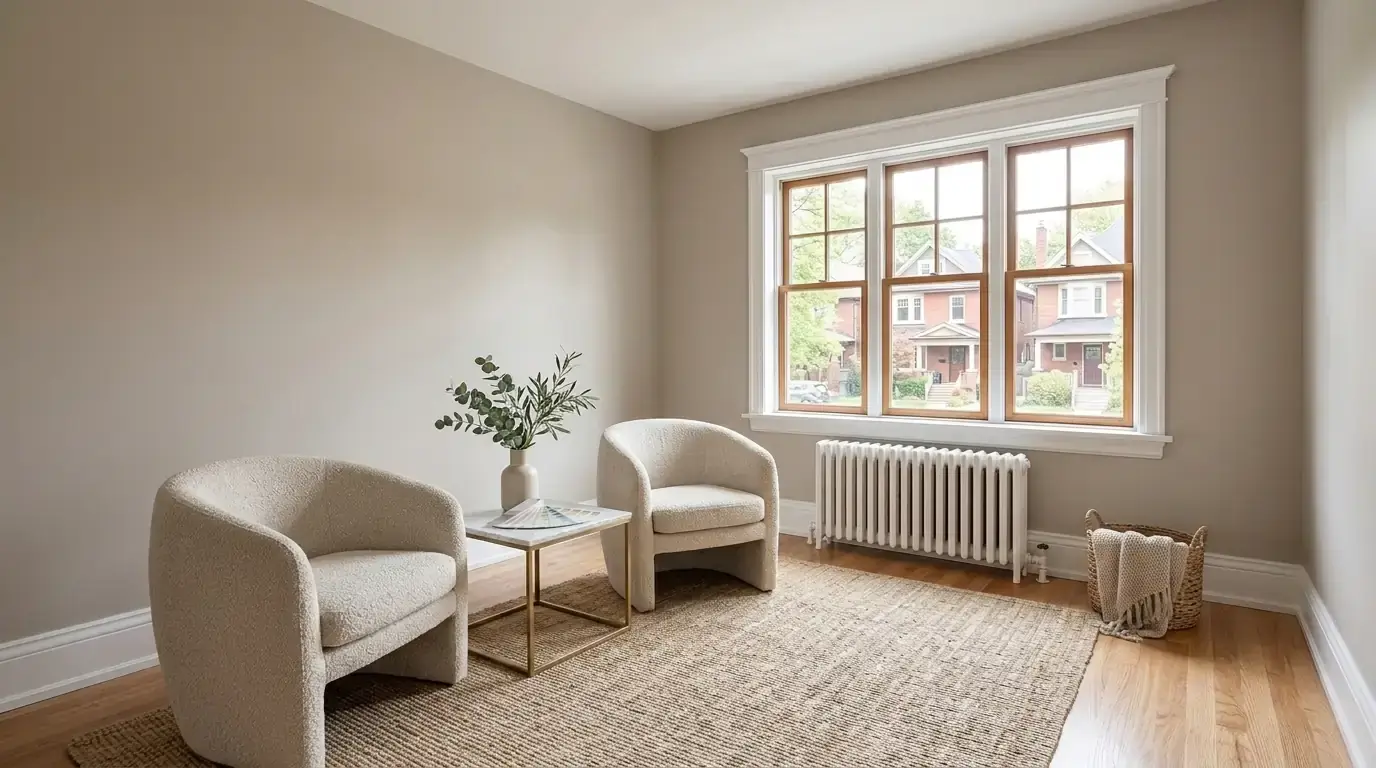
Selling a home creates a strange urge to repaint rooms that were perfectly acceptable last week. Resist it. For a painting pre-sale property Toronto project, the useful question is not “What can I paint?” but “What will a buyer notice?” Fresh paint helps when it removes a distraction. Repainting a clean spare bedroom simply because it exists is a less impressive use of the listing budget.
Start with what buyers and listing photos will see first: the entry, main living areas, kitchen, bathrooms, primary bedroom, hallways, doors, trim, and ceilings. Scuffs, patch marks, failed caulking, stains, damaged corners, obvious touch-ups, and one aggressively personal wall colour usually deserve attention before a quiet room that is already clean and cohesive.
Walk the House Like a Buyer, Not Like the Owner
Walk through the property as if you were seeing it for the first time. Do this in daylight if possible, then again with the lights on. Look from doorways, across long walls, and toward windows where defects become more visible.
Create three lists:
- Must fix: peeling areas, obvious patch marks, stains, wall damage, failed caulking, strong scuffs, or repairs that photograph badly.
- Probably worth repainting: bold accent walls, heavily marked high-traffic rooms, inconsistent colours between connected spaces, or rooms where touch-ups are obvious.
- Leave alone: clean, neutral, cohesive rooms with sound paint and no visible defects.
This simple triage keeps the project focused on buyer-facing condition rather than turning a listing preparation job into a full renovation.
Prioritize the Rooms Buyers and Cameras See First
Entry and front hall
The entry shapes the first indoor impression. Walls near doors, shoe areas, handrails, corners, and narrow hallways often collect more marks than larger rooms. Check for scuffs, dents, fingerprints, chipped corners, and worn trim. If the entry colour is already neutral but the walls look tired, a refresh can make a noticeable difference without changing the entire palette.
Living and dining areas
Main living spaces matter because they appear in listing photos and are where buyers tend to pause during showings. Look at long uninterrupted walls, fireplace surrounds, accent walls, ceiling lines, and the transition into nearby halls or kitchens. If adjoining areas use several unrelated colours, simplifying the palette can create better visual flow.
Kitchen
Kitchen wall painting should focus on cleanliness and condition. Check for grease residue, scuffs near switches, nail holes, failed caulking, marks around eating areas, and wall damage from removed shelves or decor. Cabinet refinishing is a separate scope and should not be assumed to be part of ordinary pre-sale wall painting.
Bathrooms
Bathrooms can look dated quickly when ceilings, trim, or walls show peeling, stains, failed caulking, or mismatched patching. Before painting, make sure an active moisture or ventilation problem is not being covered up. A clean, consistent finish usually matters more than choosing a dramatic new colour.
Primary bedroom
The primary bedroom is another high-visibility room in listing photography. Strong personal colours, obvious picture-frame marks, patching, or heavily worn walls may be worth addressing. If the existing colour is already neutral and the finish is clean, repainting may add little value compared with spending that time on more visibly damaged areas.
Neutral Is a Strategy, Not a Bucket of White Paint
Current Benjamin Moore Canada guidance describes neutral colours as versatile and commonly used in staged homes because they provide an adaptable, balanced backdrop. Neutrals can include whites, off-whites, grays, beiges, taupes, and related muted tones. The important part is how the colour works with the actual room.
Use flooring, trim, cabinetry, countertops, stone, and fixed finishes to guide undertone. A warm wood floor may sit more comfortably beside a warm beige or soft off-white than a stark cool gray. A modern condo with cooler finishes may work better with a different neutral direction.
Lighting matters too. A colour that looks soft in a bright south-facing room can look much darker or cooler in a north-facing room or hallway. Benjamin Moore Canada recommends testing samples in the actual space and viewing them under changing light. That is more reliable than choosing a colour from a small chip alone.
For current neutral-colour guidance, see Benjamin Moore Canada’s neutral colour guide.
Keep the Accent Wall Only if It Still Belongs in the Room
A bold wall is not automatically a problem. A buyer is unlikely to flee because one wall is blue. The issue is whether that wall dominates the room, clashes with fixed finishes, or becomes the only thing you notice in the listing photo. If it pulls attention away from the space itself, folding it back into the surrounding palette can create better continuity.
Do not assume every accent wall must disappear. A restrained feature wall that works with the flooring, furniture, and lighting may be fine. The decision should be based on condition and cohesion, not a blanket anti-colour rule.
Why a Tiny Touch-Up Can Shout Across the Room
Touch-up paint is useful when the exact product, colour, sheen, and existing finish still match. In older rooms, the repaired spot may flash because the wall has aged, faded, been cleaned repeatedly, or was originally rolled differently.
Before listing, inspect repaired areas from the side and under natural light. If several touch-ups stand out, repainting the full wall from corner to corner can look cleaner than adding more isolated patches.
The same applies to drywall repairs. A smooth patch can still be obvious if it has a different texture, sheen, or primer condition than the surrounding wall.
Look Up Before You Decide the Ceiling Is Fine
Not every ceiling needs repainting. A clean, even ceiling with no stains or visible repair marks may be left alone. Paint it when yellowing, water staining after the cause has been corrected, patching, roller marks, or a strong colour difference makes the ceiling look unfinished.
Ceiling condition becomes especially noticeable in bright rooms and listing photography. If the walls are freshly painted but the ceiling looks dull or stained, the contrast can make the room feel less finished.
Fresh Walls Can Make Tired Trim Look Even More Tired
White or light trim tends to show chips, fingerprints, vacuum damage, and dark scuffs. Before repainting all trim, clean it first and inspect what remains. Sometimes a careful cleaning and minor touch-up is enough. In other homes, worn baseboards and door frames make freshly painted walls look incomplete.
Prioritize trim in the entry, main hall, kitchen, living areas, and other rooms that will be photographed closely. Interior doors should be included when they are visibly marked, yellowed, damaged, or inconsistent with nearby trim.
Leave Well-Maintained Neutral Rooms Alone
Pre-sale painting is most efficient when you are willing to leave good surfaces alone.
- Do not repaint a clean neutral room only because the home is being sold.
- Do not change every colour simply to follow a trend.
- Do not repaint closets and utility areas unless their condition will distract buyers or they are part of the planned showing route.
- Do not cover active water damage, mould concerns, or unresolved leaks with paint.
- Do not spend heavily on specialty decorative finishes unless they clearly support the property’s presentation.
The goal is to remove visual distractions and make the property feel cared for, not to erase every sign that someone has lived there.
Listing Photos Are Unforgiving About Sheen and Patchwork
A wall can look perfectly respectable while you are standing in the room and strangely patchy in a wide-angle listing photo. Daylight from a window can exaggerate roller texture, glossy touch-ups, repaired areas, and uneven sheen across long walls. This is especially noticeable in living rooms, hallways, and open-concept spaces where the camera sees a large uninterrupted surface.
Before deciding that a wall only needs a few touch-ups, photograph it from the doorway with the curtains open. You are not trying to create a magazine shoot. You are checking whether the repair disappears at the distance and angle a buyer will actually see online.
If several patched spots flash differently, repainting the full wall from corner to corner is often cleaner than chasing each mark individually. The same logic applies to a ceiling with one obvious repaired area. Paint is very good at changing colour. It is less gifted at making mismatched texture and sheen quietly leave the room.
This is also a useful place to stop spending. If a neutral wall photographs evenly, looks clean in person, and has no distracting damage, it has already done its job. Pre-sale painting should improve presentation, not create work for the sake of having a longer invoice.
Give the Paint Job Room to Finish Before the Camera Arrives
Painting should be completed before final staging and professional photography whenever possible. That gives time for repairs, painting, cleanup, reinstalling switch plates, replacing furniture, hanging simple decor, and correcting anything noticed during the final walkthrough.
Do not build the schedule around a guaranteed number of days without reviewing the scope. One bedroom refresh is different from a full main-floor repaint with repairs, ceilings, trim, and several colour changes.
A useful order is:
- Inspect and choose the priority rooms.
- Complete repairs and solve any moisture or surface problems.
- Confirm colours in the actual lighting.
- Paint ceilings first where included.
- Paint walls.
- Complete trim and doors where needed.
- Clean the rooms and inspect under normal lighting.
- Stage the property.
- Take listing photos after the finish has been checked.
Seven Pre-Sale Painting Mistakes That Waste Your Budget
- Repainting the entire home without an inspection. Some rooms may already be sale-ready.
- Choosing a trendy neutral without checking undertones. The wrong neutral can clash with floors, stone, cabinets, and trim.
- Ignoring repairs because the colour is changing. Fresh paint can make dents, patches, and cracks more obvious.
- Using random touch-ups on large visible walls. Sheen or texture differences can show in photos.
- Painting over stains without addressing the cause. Moisture and surface problems should be investigated first.
- Leaving trim badly marked beside fresh walls. The contrast can make the room look unfinished.
- Painting too late in the listing schedule. Final inspection and staging need their own time.
Pre-Sale Painting Questions Answered
Should I paint my whole Toronto house before selling?
No, not automatically. Start with damaged, high-visibility areas and the rooms that dominate listing photos and showings. A clean, neutral room with sound paint and no distracting defects is already an asset. Repainting it for its own sake adds cost without adding value.
What paint colours are safest before listing?
Neutrals are the standard choice for staged homes because they are adaptable and let buyers imagine their own furnishings. The right neutral for your property depends on the natural light, flooring, cabinetry, stone, and trim. There is no universally flattering shade. Always test samples in the actual room under both daylight and evening lighting before committing.
Should I repaint dark or bold accent walls?
Consider repainting when the accent wall dominates the room in listing photos, clashes with fixed finishes, or breaks the colour flow between connected spaces. A restrained feature wall that genuinely works with the flooring, trim, and lighting can stay. The decision should be based on cohesion and photography, not a blanket rule against colour.
Do I need to paint the ceilings too?
Only when the condition demands it. Stains, patch marks, yellowing, uneven roller coverage, or a stark contrast with freshly painted walls can make the ceiling the most distracting thing in the room. A sound, even, unmarked ceiling needs nothing. Painting it purely out of habit is a common pre-sale budget leak.
Is touching up walls enough before selling?
Sometimes, when the original colour, sheen, product, and aged finish still match closely enough that the repair disappears. In older rooms, touch-ups often flash under natural light or in listing photos because the wall has faded, been cleaned differently, or was originally rolled with a slightly different product. When multiple touch-ups are needed, repainting the full wall from corner to corner usually looks cleaner and costs less time than chasing each mark individually.
Should trim and doors be painted before listing?
Prioritize them when chips, marks, yellowing, or worn edges are obvious, especially in entries, halls, kitchens, and main living areas.
When should painting be completed before listing photos?
Finish the painting early enough to allow for cleanup, final inspection, furniture reset, staging, and correction of any visible defects. The exact timeline depends on the real scope and surface condition.
Spend Where the Camera and the Buyer Will Notice
The most effective approach to painting pre-sale property Toronto projects is to prioritize visible condition, colour cohesion, and listing-photo exposure rather than repainting every square foot. Fix what buyers will notice, simplify what distracts, and protect your budget by leaving well-finished rooms exactly as they are.
For broader residential interior planning, see residential painting in Toronto.
If the pre-listing walkthrough turns into more than a few simple touch-ups, you can request a quote and have the priority rooms reviewed as one scope. PaintersInToronto.ca works with one licensed and insured independent painting company. The contract for any painting work is with that independent contractor, not with the website. You can also call (647) 532-9046 and Ask for SUNNY.