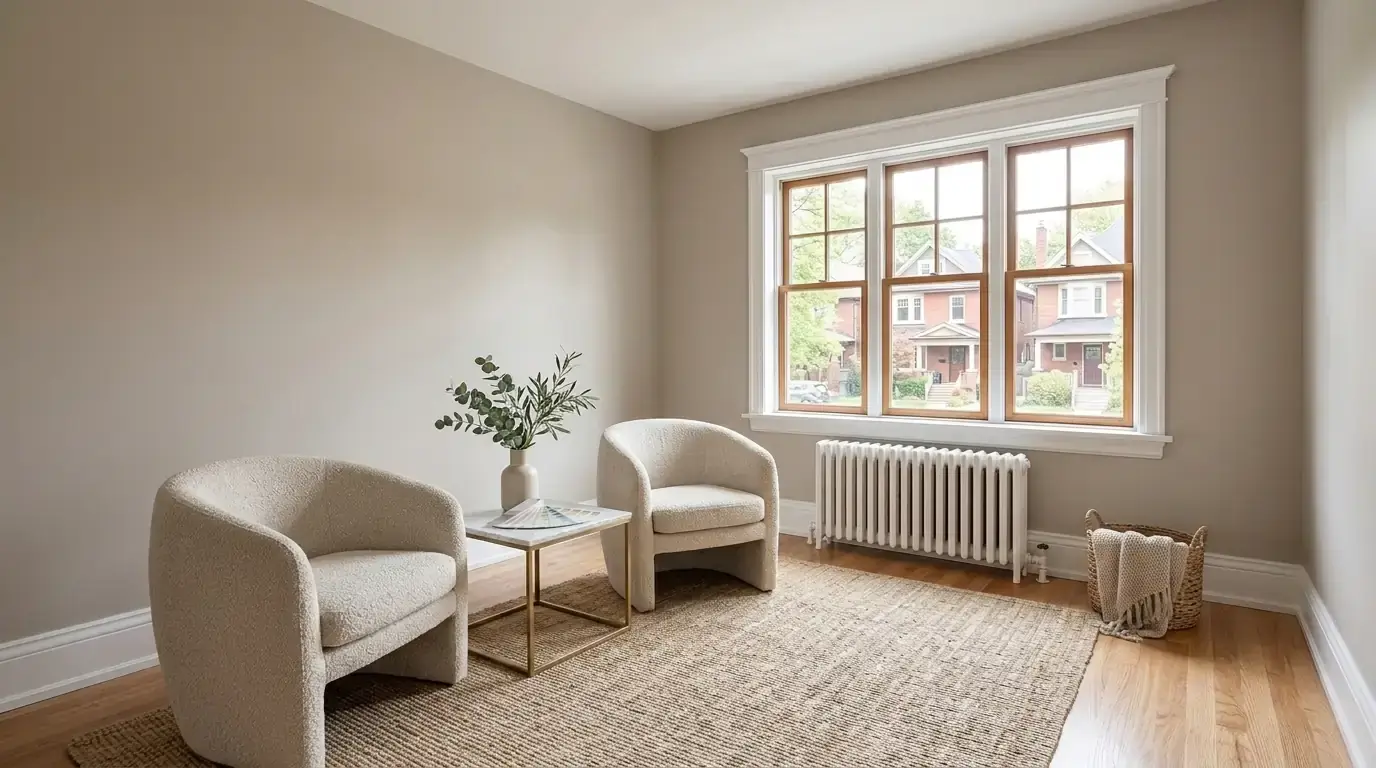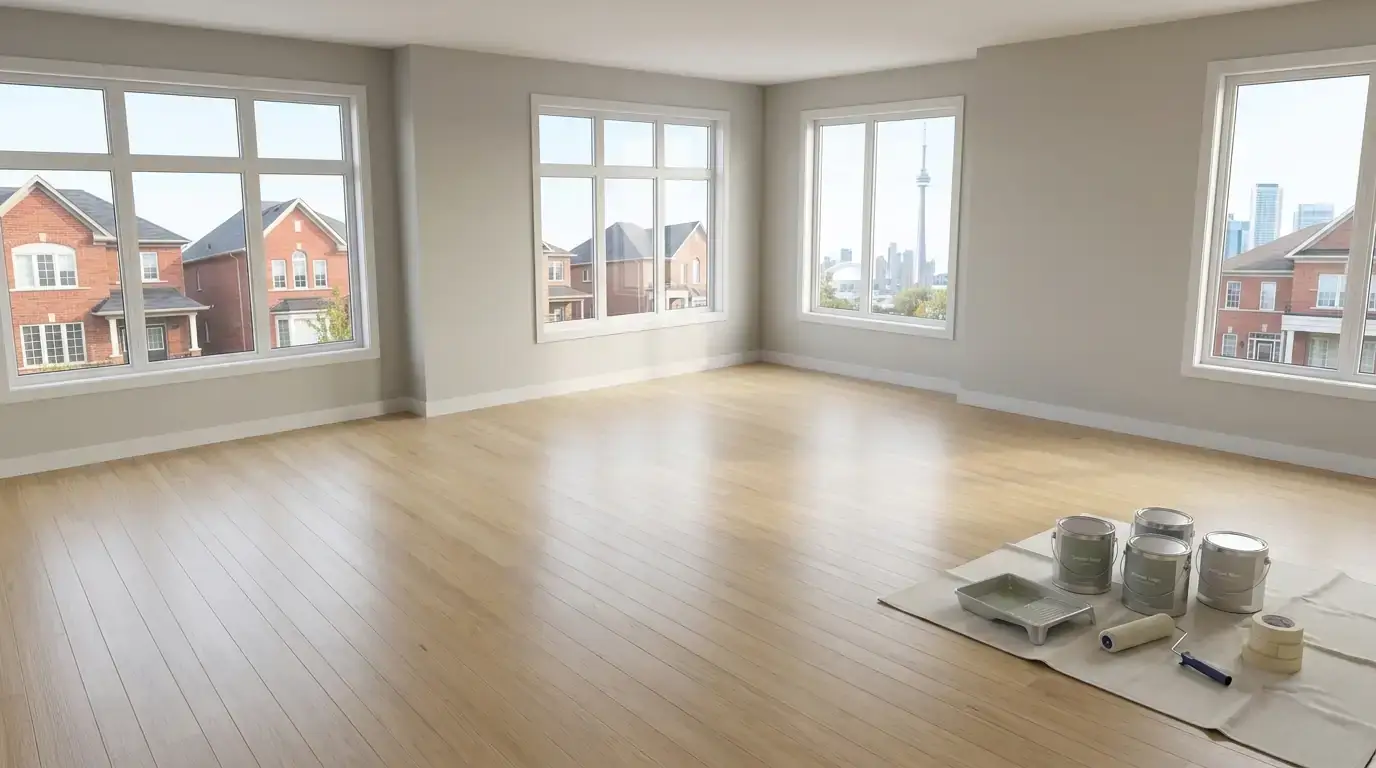
An empty home is the easiest version of itself to paint. No sofa to drag away from the wall, no bed to wrap in plastic, no bookshelf quietly daring someone to scratch the fresh trim. A good move-in painting Toronto plan uses that empty window on purpose, before movers, cleaners, appliance deliveries, and daily life start competing for the same rooms.
The schedule should work backward from the furniture date. Decide what truly needs to be finished before move-in, allow time for repairs and coating, leave room for a final walkthrough and cleaning, then give freshly painted surfaces the handling time required by the products used.
Start With the Date Furniture Enters the Door
Possession day is not the only date that matters. The important milestone is when painters need to be completely out of the way and the home needs to be ready for movers.
For a related next step, read Painting Cost Guide Toronto, painting cost Toronto.
Work backward from that point:
- When do you receive the keys?
- When can the contractor first enter?
- Are repairs needed before painting?
- Are ceilings, trim, doors, or closets part of the scope?
- When does each coating need to dry or recoat?
- When will the final inspection happen?
- When will floors be cleaned?
- When can movers bring large furniture in without rubbing against fresh paint?
The mistake is not choosing the wrong paint colour. The mistake is discovering on Thursday afternoon that the stairwell still needs a second coat and the sectional sofa is booked for Friday morning.
Use the First Empty Walkthrough to Decide What Deserves the Window
Once the previous owner’s furniture and artwork are gone, walls often reveal defects that were invisible during a showing. Nail holes, picture-frame shadows, patched drywall, scuffs, dents, faded areas, strong accent colours, and worn trim all become easier to see.
Sort the work into three groups.
Finish before the move
Prioritize surfaces that become genuinely awkward once the house fills up: stairwells, ceilings, heavily damaged rooms, closets that will be packed immediately, trim behind large furniture, and rooms receiving beds, sectional sofas, wardrobes, or built-in storage.
Worth doing while empty
Hallways, doors, baseboards, open-concept walls, and other high-access surfaces often fit here. They can be painted later, but the empty house makes the work cleaner and easier.
Safe to postpone
A clean neutral room in good condition does not become defective because you bought the house. If you are unsure how your furniture will work with the light and fixed finishes, leaving that room alone can be smarter than making a rushed colour decision.
How Much Painting Fits Into the Typical Empty-Home Window?
There is no fixed Toronto timeline because crew size, repair work, ceilings, trim, colour changes, access, and coating systems all matter. Current Toronto contractor guides provide useful planning ranges, not promises.
| Scope | Reasonable planning range | What commonly stretches it |
|---|---|---|
| Standard room | About 1 working day | Heavy patching, ceiling, detailed trim, strong colour change |
| Many condo interiors | About 2 to 4 working days | Doors, closets, ceilings, repairs, building access restrictions |
| Typical three-bedroom interior | Several working days, commonly around 4 to 7 in current Toronto guides | Older plaster, stairwells, wallpaper, extensive trim, multiple colours |
One current Toronto contractor guide publishes about one working day for a standard room, roughly 2 to 3 days for a small condo, and roughly 4 to 7 working days for a typical three-bedroom interior. Another current Toronto guide uses a broader range for larger full interiors. The overlap is more useful than pretending one exact duration fits every property.
These are planning estimates only. The real schedule may be shorter or longer after the surfaces, preparation, crew, access, materials, drying requirements, and scope are reviewed.
Why Painting Before Moving In Usually Goes Faster
Painting before moving in Toronto homes removes a surprising amount of non-painting work. In an occupied home, crews may spend time moving furniture, covering electronics, protecting beds and shelving, working around household schedules, and repeatedly resetting rooms.
An empty property gives clearer access to:
- long uninterrupted walls
- baseboards
- doors and frames
- closets
- stairwells
- ceilings
- corners behind future furniture
- open-concept spaces that would otherwise require constant furniture shifting
That does not mean every empty home should receive a full repaint. It means the surfaces you already know need work can be handled with fewer obstacles.
Make the Colour Decisions Before the Clock Starts
Possession day is a poor time to meet sixteen nearly identical warm whites for the first time. Narrow the palette before you get the keys if possible.
Listing photos can help you identify flooring, cabinetry, countertops, and trim, but final colour decisions should still be checked in the actual home. Natural light, room orientation, existing bulbs, and fixed finishes can shift how a colour reads.
If the schedule is tight, lock the main wall colours first. Decorative accent walls can wait. A late colour change is not just a design decision; it can add extra cutting, coats, drying, and lost time to a narrow move window.
Repairs Belong Before the Finish Schedule, Not Inside It by Surprise
Fresh paint will make a poor patch look freshly painted, not invisible.
Use the empty walkthrough to check for:
- nail and anchor holes
- drywall dents and damaged corners
- failed trim caulking
- old patch marks
- water stains after the cause has been corrected
- peeling or loose coating
- wallpaper or adhesive residue
- cracked or damaged plaster
- surface damage hidden behind former furniture
Repair materials can add drying time before primer or paint. If an older Toronto home needs broad plaster work, it should not be scheduled like a simple colour refresh.
Spend the Empty-House Advantage on the Surfaces That Become Annoying Later
Ceilings
Ceilings are easier before furniture arrives because ladders can move freely and the room requires less protection. If ceilings are included, painting them before walls also simplifies the finishing sequence.
Trim and doors
Baseboards, casings, doors, and frames involve detailed brushwork and their own drying behaviour. If they need painting, include them in the original scope rather than adding them when the wall work is almost finished.
Closets
Closets are nearly effortless to access when empty and remarkably inconvenient once they contain clothes, bins, shoes, and household storage. If the interiors are worn or strongly coloured, the pre-move window is valuable.
Stairwells and tall walls
These areas can require ladders or specialized access. Completing them before boxes and furniture crowd the circulation space makes the work easier and reduces the chance of fresh surfaces being damaged during setup.
A Wall Can Feel Dry Long Before It Wants a Dresser Leaning Against It
Dry-to-touch, recoat time, and full return-to-service are different milestones. Current Benjamin Moore Canada Regal Select product data, for example, lists roughly one hour dry time, a short recoat window depending on sheen, and a much longer 14-day return-to-service period under its stated conditions.
That does not mean the home must remain empty for two weeks. It means fresh coatings should be treated gently while they continue to harden.
Before moving large furniture against painted walls:
- check the exact product’s current instructions
- avoid pressing furniture tightly against fresh paint
- do not drag boxes or mattresses along walls
- be careful around fresh door frames and stairwell corners
- delay adhesive hooks, tapes, and aggressive cleaning until the coating is ready
Humidity, temperature, ventilation, film thickness, colour, and product type can all affect drying and cure.
Give the Movers a No-Contact Map
A moving crew cares about getting the sofa upstairs safely. They may not know that the stairwell wall was painted yesterday.
Before move-in, identify:
- fresh walls that should not be rubbed
- newly painted door frames
- tight corners where large furniture turns
- rooms that are completely released for use
- areas where boxes can be staged without touching walls
- surfaces that need temporary corner or rail protection
A little coordination can prevent a final touch-up list from becoming the first project in the new house.
Toronto Condos Add Elevators, Loading, and Building Rules to the Puzzle
Pre-move painting Toronto condo projects often depend on building logistics as much as paint.
Before booking the crew, confirm the rules that apply to the actual building:
- contractor access
- service elevator reservations
- loading and parking
- permitted work hours
- common-area protection
- insurance or contractor documentation if required by management
- mover elevator times
- appliance and furniture deliveries
Do not assume every condo has the same requirements. The useful point is to resolve them before the painting schedule is locked.
If the painters and movers are both booked for the same elevator window, the building has accidentally become the project manager.
Keep Other Trades Out of the Painting Window When You Can
Flooring installers, electricians, internet technicians, appliance deliveries, cleaners, and carpenters can all be part of move-in week. Some can work around painters. Others can damage fresh surfaces or simply block access.
Coordinate the sequence rather than stacking everyone on top of each other. Dusty demolition or floor sanding can ruin fresh paint. Final wall painting after major destructive work is often easier than touching up a newly painted room after another trade finishes.
The correct order depends on the actual renovation scope, so settle it before the keys change hands.
A Backward Schedule That Leaves Room for Reality
A practical sequence often looks like this:
- Before possession: narrow colours, define likely scope, get the project reviewed, and confirm condo logistics if applicable.
- First empty walkthrough: inspect walls and trim, photograph defects, confirm colours, and finalize what is worth doing now.
- Repair window: patch, sand, clean, caulk, and prime where required.
- Painting window: complete ceilings where included, then walls, trim, doors, and closets according to the actual coating system.
- Inspection buffer: allow time for missed areas, touch-ups, and normal drying.
- Cleaning: remove coverings and dust and leave circulation routes clear.
- Move-in: bring furniture in carefully and keep heavy items from rubbing against fresh finishes.
A full interior does not become a two-day project simply because the truck is booked for Saturday.
Move-In Questions That Matter More Than “Can You Start Tomorrow?”
Is it better to paint before moving in?
Often, yes. Empty rooms give better access and require less furniture handling and protection. The advantage is greatest when you already know which surfaces need repainting.
How many days should I leave between getting the keys and moving in?
There is no universal number. Current Toronto contractor guides often place a standard room around one working day, many condo interiors around 2 to 4 working days, and typical three-bedroom interiors across several working days. Repairs, trim, ceilings, crew size, access, and product timing can extend the schedule.
Can furniture come in the day after painting?
Sometimes, but the exact coating controls the answer. Paint can feel dry before it reaches full service hardness. Follow the product instructions and avoid rubbing or pressing furniture against fresh surfaces.
What should I prioritize if I only have a short possession window?
Prioritize ceilings, stairwells, closets, heavily damaged rooms, trim behind large furniture, and rooms that will be difficult to clear later. Clean neutral rooms can wait.
Should I paint before or after new flooring?
It depends on the flooring work. Dusty demolition or sanding can damage fresh paint, while final wall painting after major flooring work can simplify touch-ups. Coordinate both trades before the schedule is finalized.
What should a condo buyer check before booking painters?
Confirm contractor access, elevator requirements, loading or parking, work hours, common-area protection, and mover bookings with the building where applicable.
Use the Empty Window for the Work You Will Be Glad Is Already Done
The best move-in painting Toronto plan is selective, not frantic. Finish the awkward surfaces while access is easy, settle repairs before the painting clock starts, protect a final inspection buffer, and give movers a clear path that does not involve scraping a dresser along yesterday’s wall.
For broader residential planning, see residential painting in Toronto.
If you have a possession date and want the painting scope reviewed before furniture arrives, you can request a quote through PaintersInToronto.ca. The site works exclusively with one licensed and insured independent painting company, and any service agreement is directly with that contractor. Call (647) 532-9046 and Ask for SUNNY.