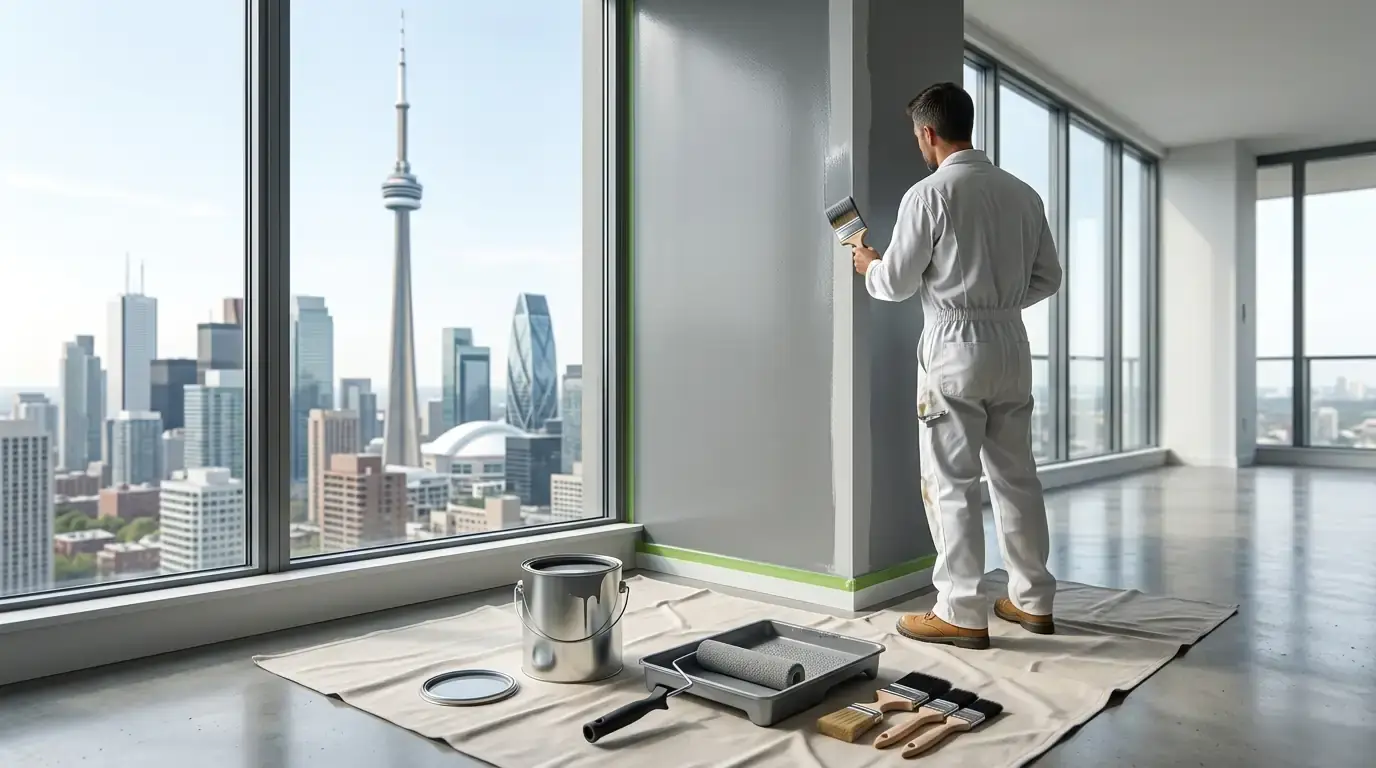
The paint can be ready, the crew can be ready, and the condo can still say no because the service elevator is booked. That is why condo suite painting Toronto building requirements should be checked before the painting date is locked in. Start with property management. Ask what contractor documents are required, whether simple interior painting needs notification or formal approval, when trades may work, how the elevator is booked and what protection is expected in common areas.
The Condominium Authority of Ontario currently advises owners to review their corporation’s governing documents and contact the board about renovation requirements before work begins. CAO also notes that some corporations require approved contractors, restricted work hours, contractor insurance information and pre- or post-work inspections. The important word is some. Toronto condos do not all run on one universal rulebook.
Get the Contractor Package Before You Get the Quote Calendar Out
Ask the management office for the current renovation or contractor package. If the building does not use a formal package, ask for the requirements in writing.
You want answers to these questions:
- Does ordinary suite painting need notification, a form or formal approval?
- What days and hours may contractors work?
- Does management require contractor insurance information or a Certificate of Insurance?
- Does the contractor need to be on an approved vendor list?
- Must tools and paint move through a service elevator?
- Does that elevator require a reservation?
- Is there a building-specific deposit or damage procedure?
- What protection is required in hallways, elevators and lobbies?
- Where can the crew load, park and stage materials?
- Is a pre-work or post-work inspection required?
Do not fill in missing answers from another building’s policy. A tower across the street can have different governing documents, different elevator procedures and different contractor hours, even when both lobbies look almost identical.
The Declaration Matters More Than a Neighbour’s Advice
CAO explains that each Ontario condominium corporation operates under the Condominium Act together with its own declaration, bylaws and rules. Those governing documents define what is permitted and how the corporation manages shared property.
For painting work, relevant provisions may cover contractor access, renovations, work hours, noise, elevator use, waste handling, common-area protection and owner responsibility for damage.
One building may treat a basic wall repaint as routine contractor access. Another may still require a contractor form before any trade enters the suite. The correct answer comes from your corporation, not from a generic “Toronto condo painting rules” article.
For the current provincial framework, see the Condominium Authority of Ontario’s condo renovations guidance.
Know Where the Unit Ends Before You Paint the Boundary
Inside walls, ceilings and trim may seem obviously part of the suite, but condominium boundaries depend on the declaration. CAO identifies hallways and elevators as examples of common elements and explains that changes to common elements generally require a different approval process.
If the painting scope reaches a balcony element, corridor-facing surface, suite-entry door, shared mechanical enclosure or another boundary item, ask management before changing it. Do not let the crew decide ownership based on which side of the door they are standing on.
This is especially important because cosmetic appearance can be controlled on the common-element side even when the owner maintains part of the component.
A Certificate of Insurance Is Common, Not Universal
For condo suite painting rules, contractor insurance paperwork is one of the most common sources of confusion. CAO says some condo corporations may require insurance information from contractors, but it does not prescribe one standard Toronto liability limit or one universal certificate format.
Management may ask for:
- the contractor’s legal business name
- insurer and policy information
- commercial general liability details
- effective and expiry dates
- specific certificate-holder wording
- additional-insured wording where the corporation requires it
Send the building’s exact instructions to the contractor. A generic certificate that looks impressive but names the wrong entity can still get rejected at the desk.
Book the Elevator Before the Crew Books Its Day
CAO’s current Condo Owners’ Guide recommends booking elevators or other access points in advance when contractors need them. For painting condo suite Toronto projects, this can control the actual start date.
Ask:
- whether contractors must use the service or freight elevator
- whether a reservation is required
- what time blocks are available
- whether building staff install elevator pads
- whether multiple trips are allowed during the workday
- whether a building-specific fee, deposit or security arrangement applies
- which loading entrance the crew should use
Do not assume a universal 24-, 48- or 72-hour lead time. Those numbers appear on contractor and building pages, but CAO does not set one Toronto-wide elevator reservation rule.
Contractor Hours Can Turn a Three-Day Scope Into Four Calendar Days
CAO notes that some condo corporations restrict contractor work to certain hours. That can matter even for painting, especially where prep involves sanding, vacuums, ladders and repeated trips through shared areas.
Confirm the actual weekday start and stop times, Saturday rules, Sunday or holiday restrictions and quiet hours. If the crew can work only a shorter window than it would in a detached house, the calendar needs to reflect that.
There is nothing magical about a painter’s estimate of “three days” if the building only gives the crew six usable hours each day.
Protect the Whole Route, Not Just the Hardwood Inside the Suite
The project begins at the loading entrance. Paint, ladders, vacuums and drop cloths travel through property the condo corporation has to maintain.
Ask whether the building requires protection for:
- elevator floors or walls
- hallway carpet
- lobby stone or tile
- suite-entry flooring
- corners near the service elevator
- doors and frames along the loading route
Keep containers closed during transport. Do not leave tools, dust or waste in common areas. If something is damaged or spilled on a corporation-owned surface, report it through the building’s process rather than quietly turning a five-minute cleanup into a five-week argument.
Figure Out Paint Delivery and Waste Before the First Pail Arrives
Some buildings have specific loading routes and disposal rules. Ask where paint can be unloaded, where tools may be staged, how empty containers are handled and whether renovation debris has a designated disposal point.
The contractor should follow the coating manufacturer’s cleanup and disposal instructions as well as the building’s requirements. Leftover liquid paint and wash water should not simply be poured into a condo drain because it happens to be nearby.
Painting Can Quietly Turn Into a Different Renovation
A standard repaint is one thing. Moving outlets, replacing lighting, opening walls, altering plumbing, changing ventilation or touching fire-safety systems is another.
CAO notes that municipal permits are commonly associated with structural, plumbing, electrical and exterior changes. If the scope grows beyond painting, stop and confirm what approvals and licensed trades are required before those extras are folded into the job.
The phrase “while you’re here…” has launched many a schedule problem.
A Building-First Sequence That Prevents Lobby Delays
- Define the suite scope. List walls, ceilings, trim, doors, repairs and any non-paint work.
- Contact management. Get the current contractor requirements.
- Review governing documents. Confirm any rules that affect alterations, work hours, access or noise.
- Submit required paperwork. Send contractor information, insurance documents and forms requested by management.
- Obtain approval where required. Do not assume cosmetic work is automatically exempt from the building’s process.
- Reserve access. Match the service-elevator booking to the real delivery and work dates.
- Confirm loading and parking. Give the crew the correct entrance and instructions.
- Confirm work hours. Build the schedule around the approved trade window.
- Plan common-area protection. Follow the corporation’s route requirements.
- Complete the suite work. Keep shared routes clean and accessible.
- Remove materials and waste. Follow building policy.
- Arrange any required sign-off. Complete a post-work inspection if the corporation requires one.
Send the Painter a Building Brief Before Start Day
The contractor should know the building logistics before arriving. Send:
- property-management contact information
- concierge or security check-in procedure
- approved work hours
- elevator reservation details
- loading entrance
- parking instructions
- common-area protection requirements
- insurance-document instructions
- waste-removal rules
- suite number and access method
This simple briefing prevents the crew from learning your building’s rules one phone call at a time while standing beside the concierge desk.
The Seven Delays That Keep Reappearing
- Booking the painter before checking building rules. The date may not be available for contractors.
- Assuming every Toronto condo wants the same COI. Wording and limits can vary.
- Using another building’s work hours. Your corporation controls your schedule.
- Forgetting the service elevator. Equipment access may need its own reservation.
- Ignoring common-area protection. The work route matters as much as the suite floor.
- Painting a boundary surface without checking ownership. The declaration controls unit boundaries.
- Adding electrical or plumbing changes casually. The approval requirements can change when the scope changes.
Occupied and Empty Suites Create Different Logistics
An empty condo is usually simpler to paint because the crew has direct access to walls, closets and trim. An occupied suite adds furniture protection, resident access, pets, work-from-home schedules and more trips through the service elevator.
If the unit is occupied, decide where the crew can stage tools, which room is available first and how residents will move through the suite without crossing wet work areas. If the condo is empty before move-in, coordinate the painter with cleaners, movers, internet installers and furniture deliveries so the same elevator is not promised to everyone at once.
Building rules still control either way. An empty unit does not turn a service elevator into a private lift.
Colour and Finish Choices Can Affect the Building Only at the Boundaries
Most interior colour choices are personal, but boundary elements deserve extra caution. A suite-entry door, balcony-facing component or corridor-visible surface may be governed by the declaration or corporation rules even if it can be reached from inside the unit.
Before changing a colour that is visible from a common element, ask management whether the corporation controls the appearance. This is less about paint chemistry and more about avoiding the wonderfully awkward situation where a perfectly painted door has to be painted back.
Condo Painting Questions Worth Asking Before You Book a Painter
Do I need board approval to paint my condo?
Not every corporation handles ordinary interior painting the same way. CAO advises owners to review governing documents and contact the board about the required process. Ask management whether your project needs notification, a contractor form or formal approval.
Does the painter need a Certificate of Insurance?
Some buildings require contractor insurance information, often supplied through a COI. There is no universal Toronto limit or standard wording set by CAO.
Do painters need a service elevator reservation?
Many high-rise buildings control contractor elevator access. CAO recommends booking elevators or other access points in advance when contractors need them. Your building sets the actual process.
Can painters work on weekends?
It depends on the corporation’s rules. Confirm Saturdays, Sundays, holidays and quiet hours before the project is scheduled.
Can I paint the inside of my suite door?
Possibly, but unit boundaries vary. Check the declaration or ask management before changing a door or surface that may form part of a common element.
Who is responsible if a hallway or elevator is damaged?
Responsibility depends on the facts, governing documents, insurance and contracts. That is one reason corporations often require route protection and contractor information before access is granted.
Management First, Paint Second
The smoothest condo suite painting Toronto building requirements process is the one nobody has to improvise in the lobby. Confirm the corporation’s rules, contractor documents, work hours, elevator access, common-area protection and any inspection requirements first. Then schedule the painting around the building you actually live in, not the mythical Toronto condo where every rule is supposedly the same.
For broader condo and property-management work, see condo and property management painting in Toronto.
Once the building requirements are known, you can Request a Free Quote through PaintersInToronto.ca from one licensed and insured independent painting company. Any service agreement is directly with that contractor. Call (647) 532-9046 and Ask for SUNNY, or use the contact page.
