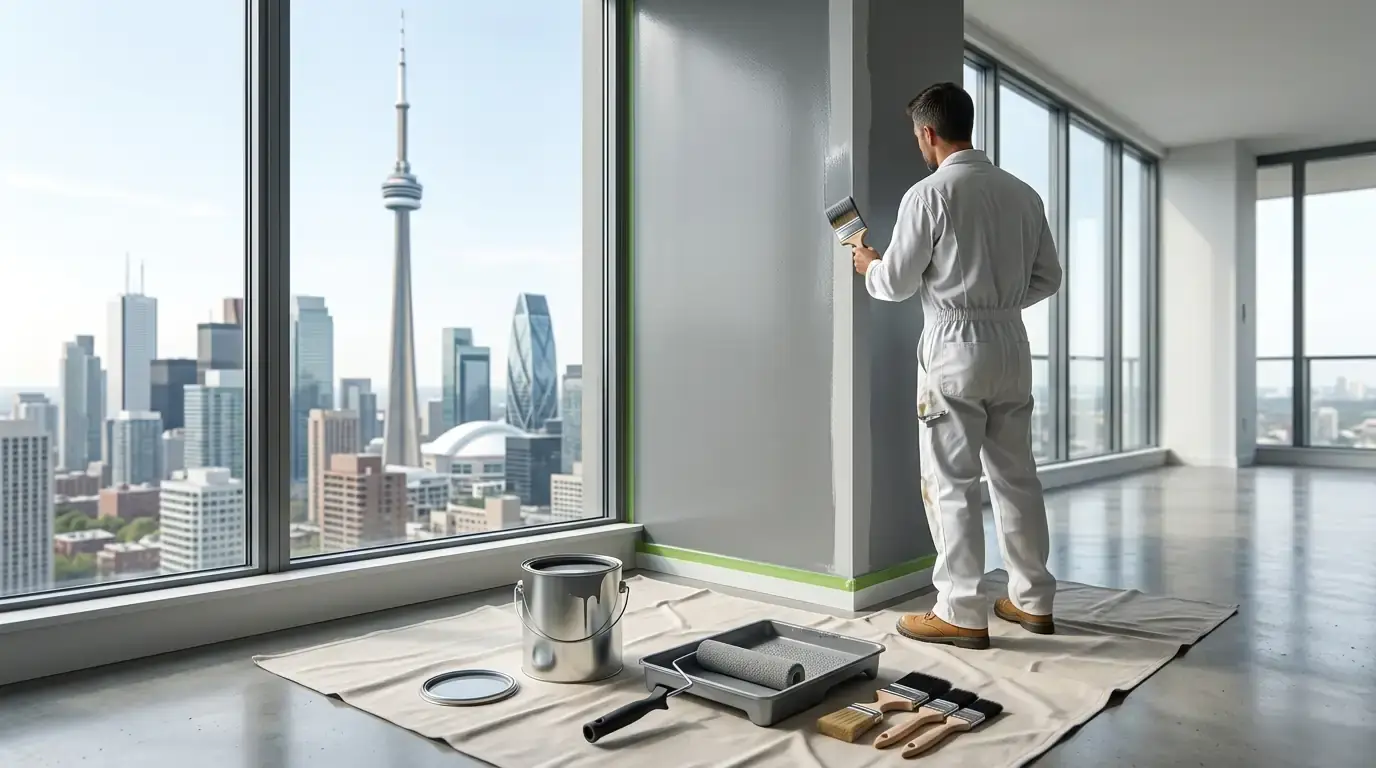
Condo building access rules painting Toronto projects commonly involve elevator booking, contractor document review, permitted work hours, parking or loading coordination, concierge sign-in, and protection of common areas. The most common mistake is booking a painter before confirming those requirements with property management. A crew can be ready to work and still lose hours if the service elevator is unavailable, the insurance certificate is incomplete, the loading entrance is locked, or the building allows contractors only during a narrower window.
There is no single access procedure shared by every Toronto condominium. The Condominium Authority of Ontario advises owners to review their corporation’s governing documents before renovations, and notes that some corporations may require approval, approved contractors, or work during specific hours. The practical solution is to obtain the building’s contractor package in writing before choosing the final project dates.
Condo Building Access Rules Painting Toronto Owners Should Check First
Before requesting a final schedule, ask the property manager or concierge for the building’s current renovation, contractor, and service-elevator procedures. Do not rely only on what another resident was allowed to do last year. Rules, forms, management companies, and booking systems can change.
| Item to confirm | Question to ask management | How it can affect painting |
|---|---|---|
| Approval | Does suite painting require notice, a form, or written approval? | Work may not start until management confirms the scope. |
| Insurance | What certificate wording, insured parties, and supporting documents are required? | An incomplete document can block contractor entry. |
| Elevator | Is a service elevator booking required for tools, ladders, paint, or debris? | Limited booking windows can determine delivery and removal times. |
| Work hours | What days and hours may painters enter, prepare surfaces, and work? | Shorter days can extend a multi-day project. |
| Loading and parking | Where may the vehicle stop and how long may it remain? | Remote parking adds time for every material trip. |
| Security access | Who signs in the crew and provides fob, key, or floor access? | The owner or authorized contact may need to be available. |
| Protection | What protection is required in corridors, elevators, and the lobby? | Extra materials and setup time must be included. |
| Waste and cleanup | Where may empty containers, masking, and debris be taken? | Building disposal rooms may not accept contractor waste. |
Send the answers to the painter before the quote is finalized. Access restrictions are part of the job conditions, just like wall condition, furniture, ceiling height, and surface preparation.
The Three Layers of Rules That Can Apply
A Toronto condo painting project may be affected by three separate layers of requirements.
1. Ontario condominium law and governing documents
The Condominium Authority of Ontario explains that the Condominium Act and the corporation’s governing documents set out what owners, residents, and corporations may do. The hierarchy is the Act, declaration, by-laws, and rules. Owners should review those documents and ask the board or manager whether the proposed work needs approval.
Simple repainting inside a suite may be treated differently from work that affects common elements, plumbing, electrical systems, ceilings, fire-safety components, or structural assemblies. Do not assume that every project needs the same approval. Describe the actual scope clearly, including repair work, spray application, ladder access, door painting, trim removal, or work on areas that may be common elements.
2. City of Toronto noise rules
Toronto’s noise bylaw restricts clearly audible construction noise. The City states that it is not permitted Monday to Friday from 7 p.m. to 7 a.m., Saturday before 9 a.m. and after 7 p.m., and all day Sunday and statutory holidays. These are municipal restrictions, not a promise that a condo must admit contractors during every remaining hour.
A building may set narrower contractor hours, such as weekday daytime access only. Painting with brushes and rollers may be quiet, while sanding, scraping, drilling, moving ladders, or transporting materials may create more disturbance. Follow the building’s written schedule even when the City bylaw would allow a wider window.
3. Building operations and security procedures
Property management controls practical access to elevators, loading areas, parking, keys, fobs, floors, service corridors, and waste rooms. These operating procedures can affect the project even when no formal board approval is needed. The crew must be able to enter, move materials safely, protect common areas, and leave the building according to the agreed process.
Review the CAO’s condo renovations guidance and the City of Toronto’s current noise bylaw information, then confirm the building-specific requirements directly with management.
Elevator Booking Can Control the Entire Schedule
The CAO Condo Owners’ Guide recommends booking the elevator or other access points in advance when equipment must be transported. For painting, the need depends on the building and the amount of material. A small occupied-suite repaint may require only a few tools and paint containers. A full repaint with ladders, floor protection, repair equipment, multiple coatings, and removed doors can require several trips.
Ask whether painters may use a passenger elevator or must use a service elevator. Some buildings reserve elevator pads and require staff to place them before the booking. Others coordinate the service elevator with moves, deliveries, maintenance, and other contractors. A missed slot may mean waiting until another day.
Confirm these details:
- Who is allowed to make the reservation
- How far in advance bookings open
- Whether a deposit, fee, or damage form applies
- The exact start and end time
- Where the crew checks in
- Whether elevator pads must be requested separately
- Which entrance and loading area must be used
- Whether the elevator is needed again for daily cleanup or final removal
Do not book only enough time to carry paint upstairs. The crew may also need to bring in ladders, vacuums, drop cloths, patching materials, and tools, then remove waste and equipment at the end.
Certificate of Insurance Requirements
Many Toronto condo buildings request proof of contractor insurance before allowing work, but there is no universal Ontario coverage amount or certificate wording for every suite painting project. The building may ask for a certificate of insurance naming the corporation, property manager, or other parties in a specific way. It may also request WSIB documentation or other contractor information.
The CAO’s procurement guide recommends that condominium boards obtain a valid certificate of insurance and WSIB clearance before corporation-procured work begins, with the insurance certificate reviewed by the corporation’s insurance professional. A private suite repaint is not automatically the same type of project, so the owner should ask management exactly what is required.
Send the painter the building’s written insurance instructions rather than asking for a generic certificate. Confirm:
- The legal name of the condominium corporation
- The property management company’s legal name
- The building address and unit number
- Required certificate holder or additional insured wording
- Required policy type and minimum limit, if specified
- Whether WSIB clearance or an exemption document is requested
- The submission email and approval deadline
A certificate should be reviewed before the crew arrives. Showing a document to the concierge on the first morning may not be enough if management requires advance approval.
Permitted Work Hours Affect More Than the Finish Date
Restricted hours reduce the productive time available each day. A crew may be allowed in at 9 a.m. but lose time signing in, receiving elevator access, carrying materials, and protecting corridors. If tools must be removed before the contractor window closes, cleanup starts earlier than it would in a detached house.
This affects the estimate in several ways:
- A project that would fit into two long days may require three shorter building days.
- Drying time may occur overnight, but access may delay the next coat.
- One missed elevator booking can shift the full schedule.
- Noisy preparation may be limited to narrower hours than quiet coating work.
- Weekend work may be prohibited even when the owner prefers it.
Ask whether the building distinguishes between quiet painting and louder preparation. Do not assume that exception exists unless management confirms it in writing.
Parking, Loading, and Security Sign-In
Downtown and high-rise projects often have limited contractor parking. A loading bay may be available only during the elevator reservation. Visitor parking may prohibit commercial vehicles or have height restrictions. Street parking may require repeated trips between the vehicle and building.
Confirm where the crew can stop to unload, whether a licence plate must be registered, and whether tools may remain in the suite overnight. If no on-site parking is available, the quote and schedule should account for the additional travel and carrying time.
Security may require every worker to sign in and out, show identification, wear a contractor badge, or remain accompanied in service areas. The unit owner, tenant, landlord, or property manager may need to provide written authorization. Decide who will be reachable if the concierge cannot release a fob or allow access to the floor.
Protecting Elevators, Corridors, and Other Common Areas
Common areas are generally controlled by the condominium corporation. The owner and contractor should understand who protects the route from the loading area to the suite and who is responsible for any damage.
A building may require:
- Elevator wall pads
- Floor runners or drop cloths through the corridor
- Covered carts for paint and tools
- Sealed containers during transport
- No storage outside the suite
- Immediate cleanup of dust, drips, or debris
- Daily removal of waste
The painting crew should not block fire doors, exits, stairwells, corridors, or elevator lobbies. Paint, ladders, and tools should stay inside the approved work area except during active transport.
Planning an Occupied Condo Painting Project
A suite can often be painted while the owner or tenant remains in it, but access and room sequencing need to be planned. The crew may need a clear path from the entrance to the work area, secure storage for tools, ventilation, and permission to move between rooms.
Before work starts, decide:
- Who will meet the crew or authorize entry each morning.
- Whether building staff may release keys or fobs.
- Which rooms remain available to the resident each day.
- Where pets will stay during preparation and painting.
- Whether furniture will be moved by the owner or painter.
- Where tools and materials may remain overnight.
- How doors will be locked and access returned at the end of the day.
An occupied project may be sequenced one room at a time, while an empty suite can often be prepared and coated more efficiently. The building access rules still apply in either case.
A Practical Pre-Start Sequence
- Get the current contractor package. Request it from property management before confirming dates.
- Describe the exact work. Include wall repairs, ceilings, trim, doors, spray use, and any work outside the suite.
- Obtain approval when required. Wait for written confirmation rather than assuming silence means approval.
- Send insurance instructions to the painter. Use the exact legal names and wording supplied by management.
- Book elevator and loading access. Reserve enough time for delivery and later removal.
- Confirm work hours and noisy preparation limits. Build the project schedule around the stricter building rules.
- Arrange parking, sign-in, keys, and fobs. Identify one person who can solve access problems quickly.
- Confirm common-area protection. Know who supplies runners, elevator pads, and cleanup.
- Reconfirm one business day before work. Verify that documents are approved and bookings remain active.
For building-focused painting options, see the condo and property management painting page, the commercial painting page, and the landlord and property manager painting page.
Frequently Asked Questions
Do painters need a certificate of insurance to work in a Toronto condo?
Many buildings require one, but the wording and coverage requirements vary. Ask management for the current written instructions and send them to the painter before the work date. Do not assume a generic certificate will satisfy the building.
How do I book an elevator for painters in my condo building?
Contact property management or the concierge and ask whether the owner, tenant, or contractor must make the booking. Confirm the service entrance, loading location, deposit or fee, wall pads, start and end time, and whether a second booking is needed to remove equipment.
What are the permitted painting hours in a Toronto condo building?
The building’s governing documents and contractor procedures determine the actual access window. Toronto also restricts clearly audible construction noise at certain times, but a condo may use narrower hours. Confirm the building schedule in writing before setting project dates.
Can I have my condo suite painted while I am still living in it?
Often yes. Plan room sequencing, furniture, ventilation, pets, overnight tool storage, and daily access. The painter should know which rooms must remain available and who can authorize entry each day.
Does every condo painting project need board approval?
No universal rule applies to every scope and building. Some corporations require notice or approval for renovations, while simple decorative repainting may follow a shorter management process. Check the declaration, by-laws, rules, and current contractor package.
Can the painter use the passenger elevator?
Only if the building allows it. Some properties require all contractors, ladders, tools, and materials to use a service elevator and loading entrance. Ask before arrival so the crew does not lose time or violate building procedures.
Who is responsible for damage to a condo hallway or elevator?
The answer can depend on the governing documents, contractor agreement, insurance, and circumstances. Before work starts, confirm the required protection, document existing damage, and understand any owner or contractor responsibility form requested by management.
Request a Condo Painting Quote
PaintersInToronto.ca works exclusively with one licensed and insured independent painting company. Any service agreement is directly with that independent contractor. To discuss condo building access rules painting Toronto project requirements, Request a Free Quote, call (647) 532-9046, and Ask for SUNNY.